- Home
- Turquoise
Turquoise Jewelry for Women
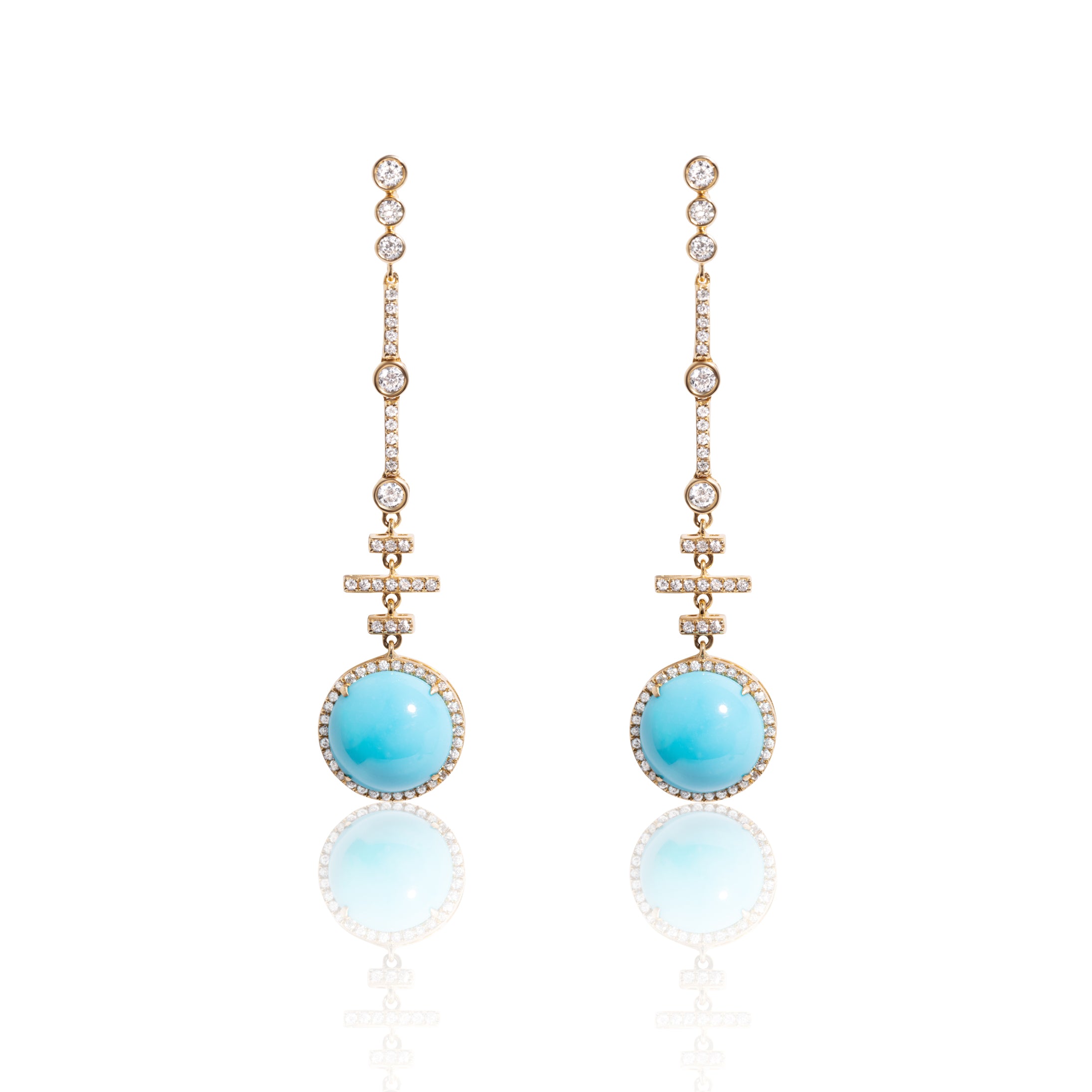
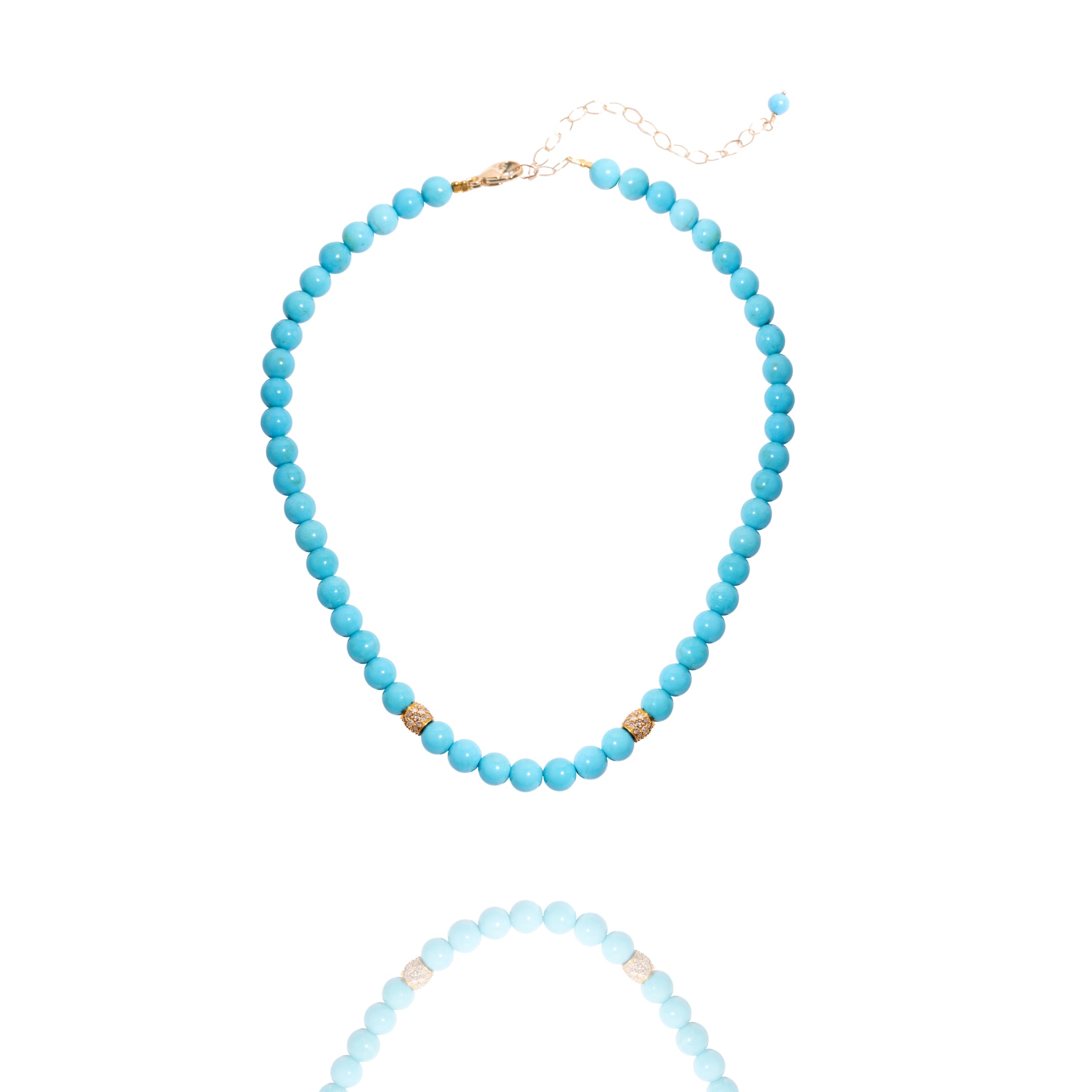
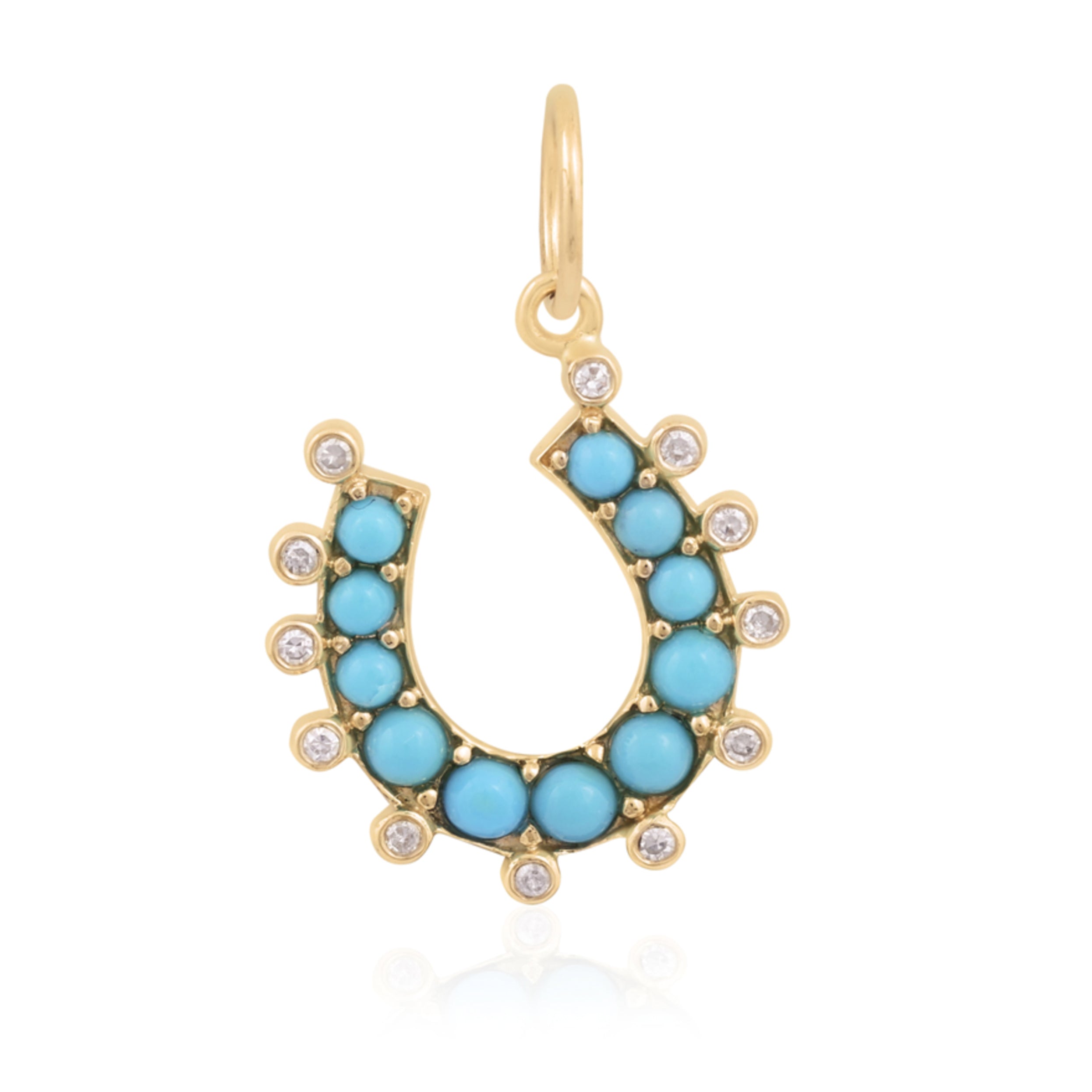
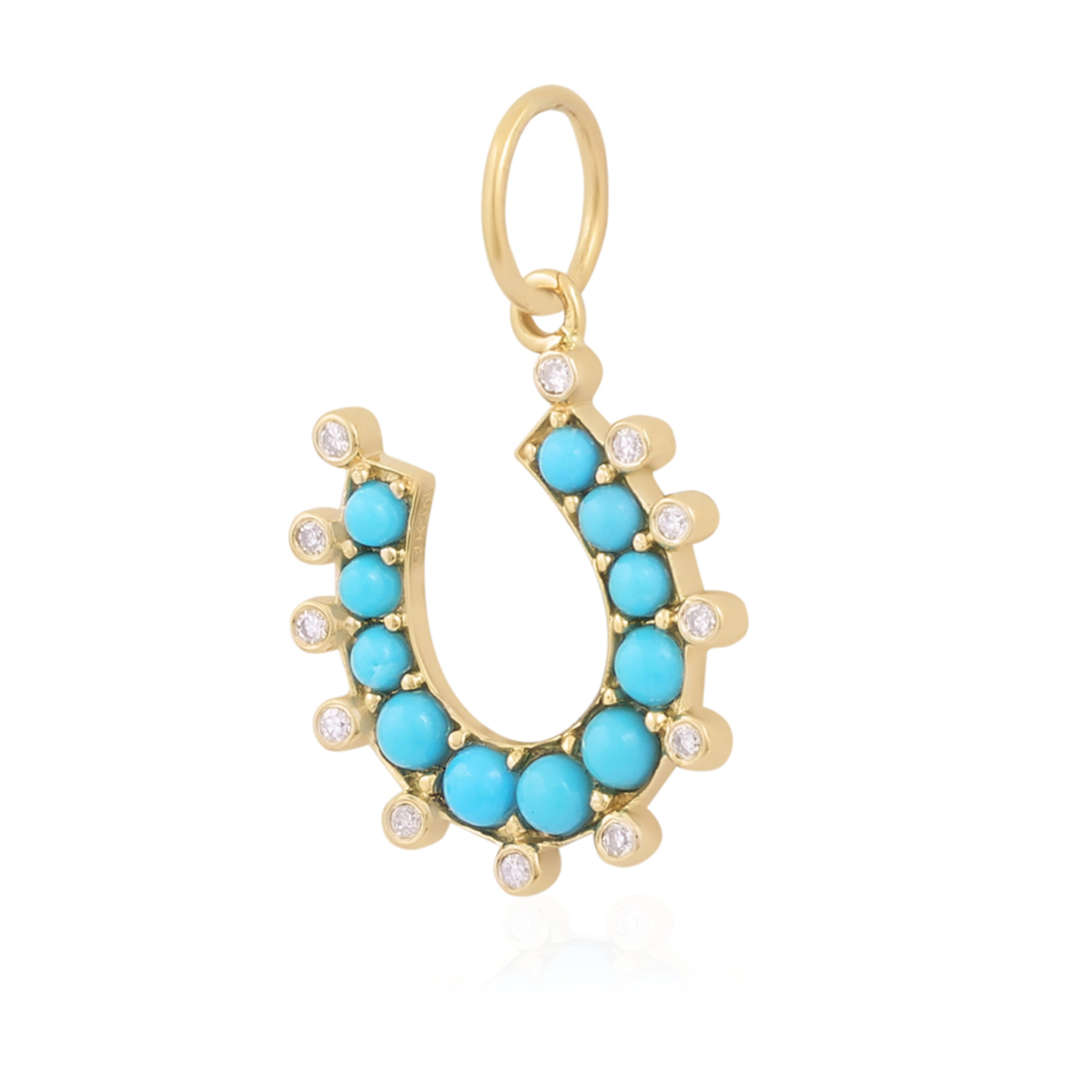
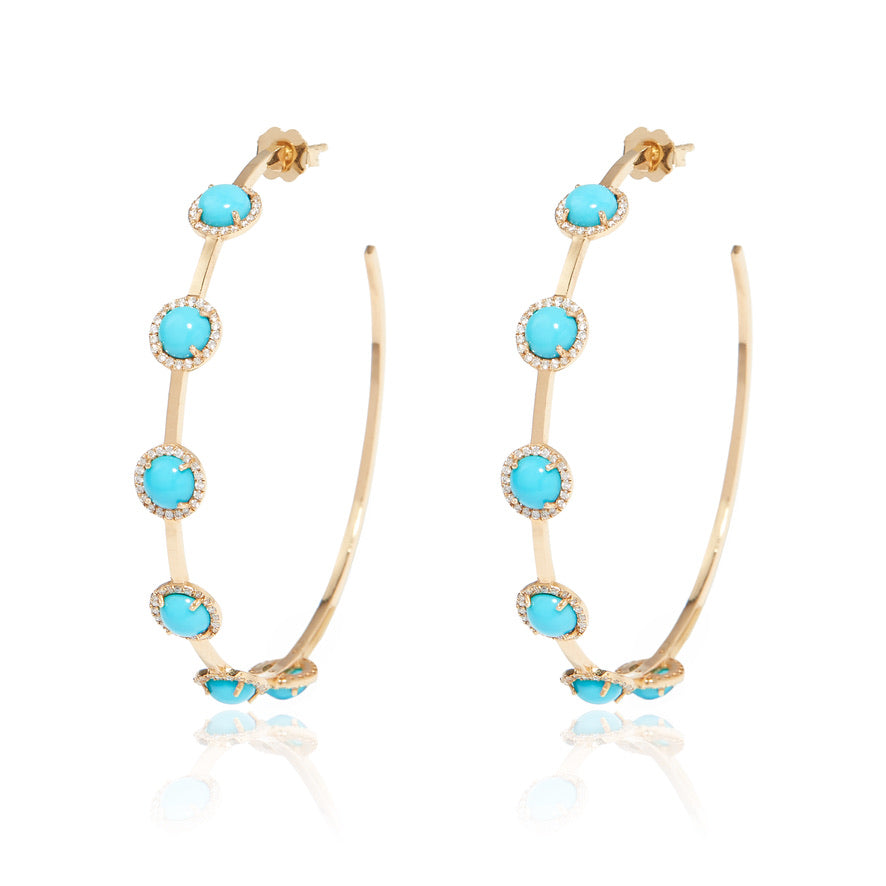
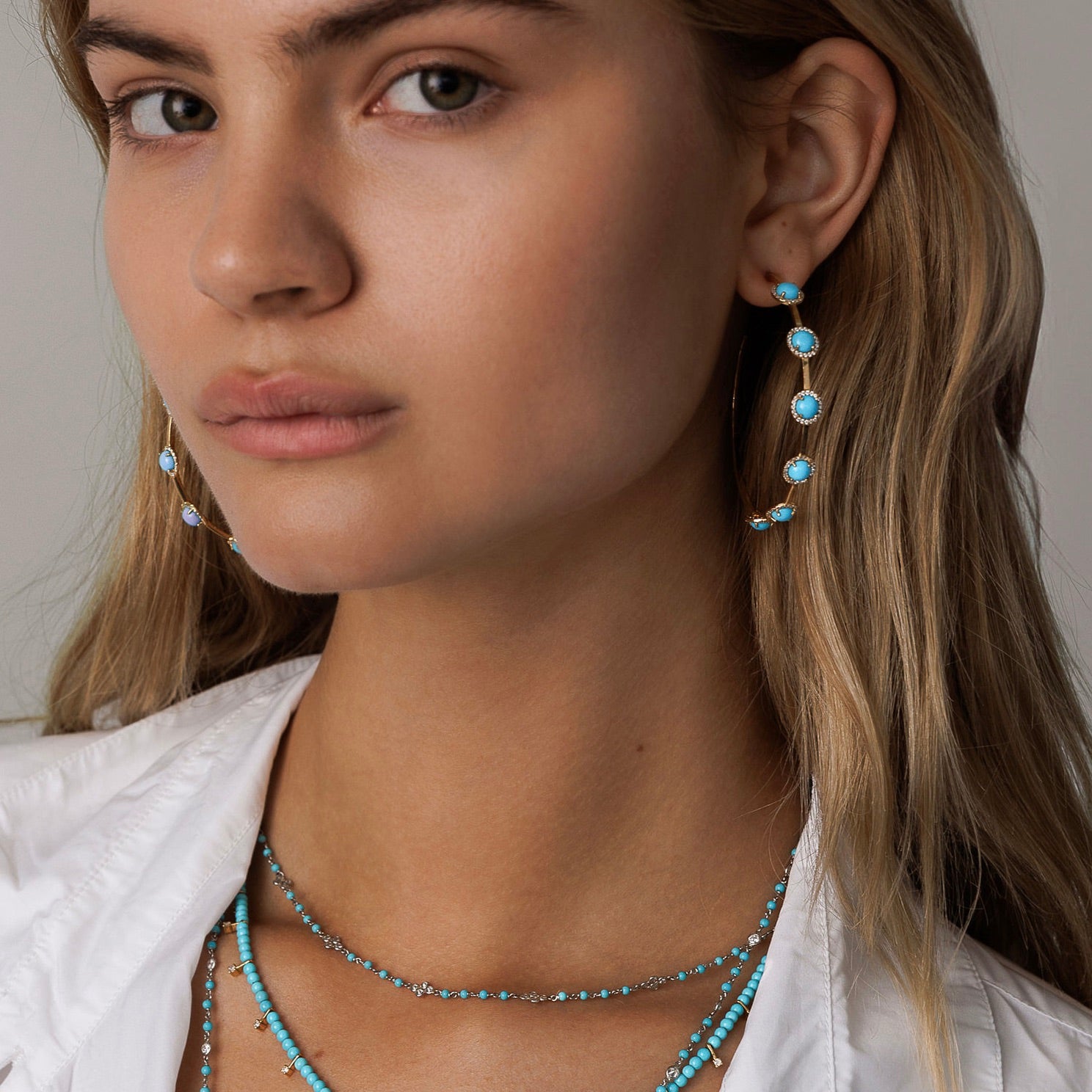
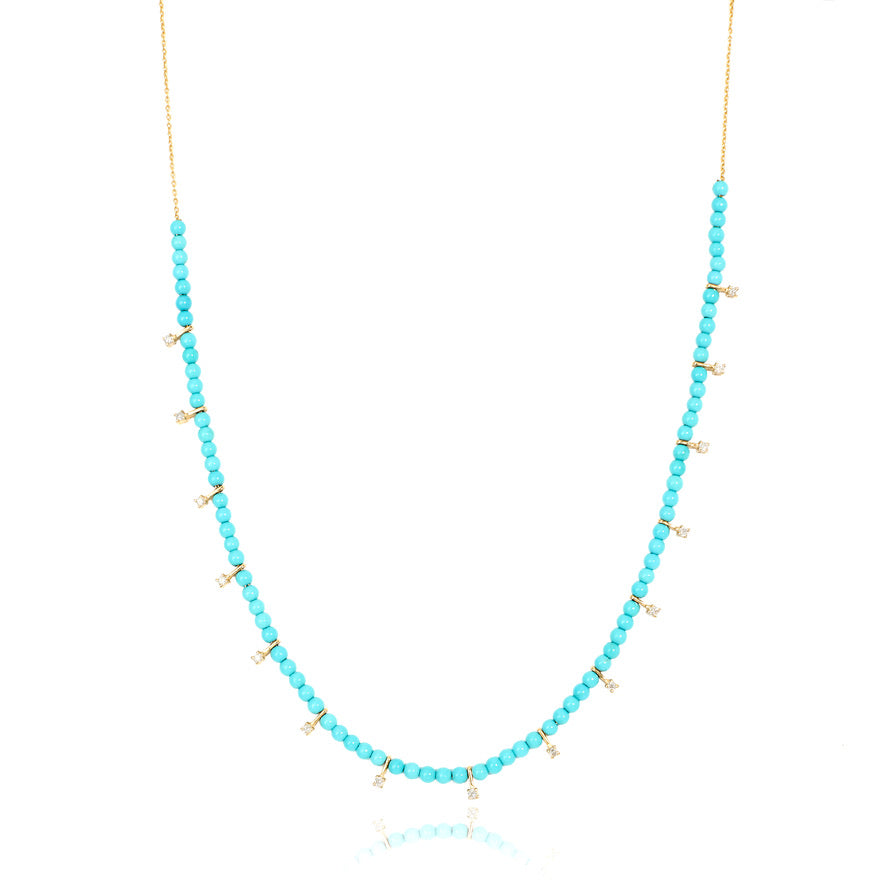
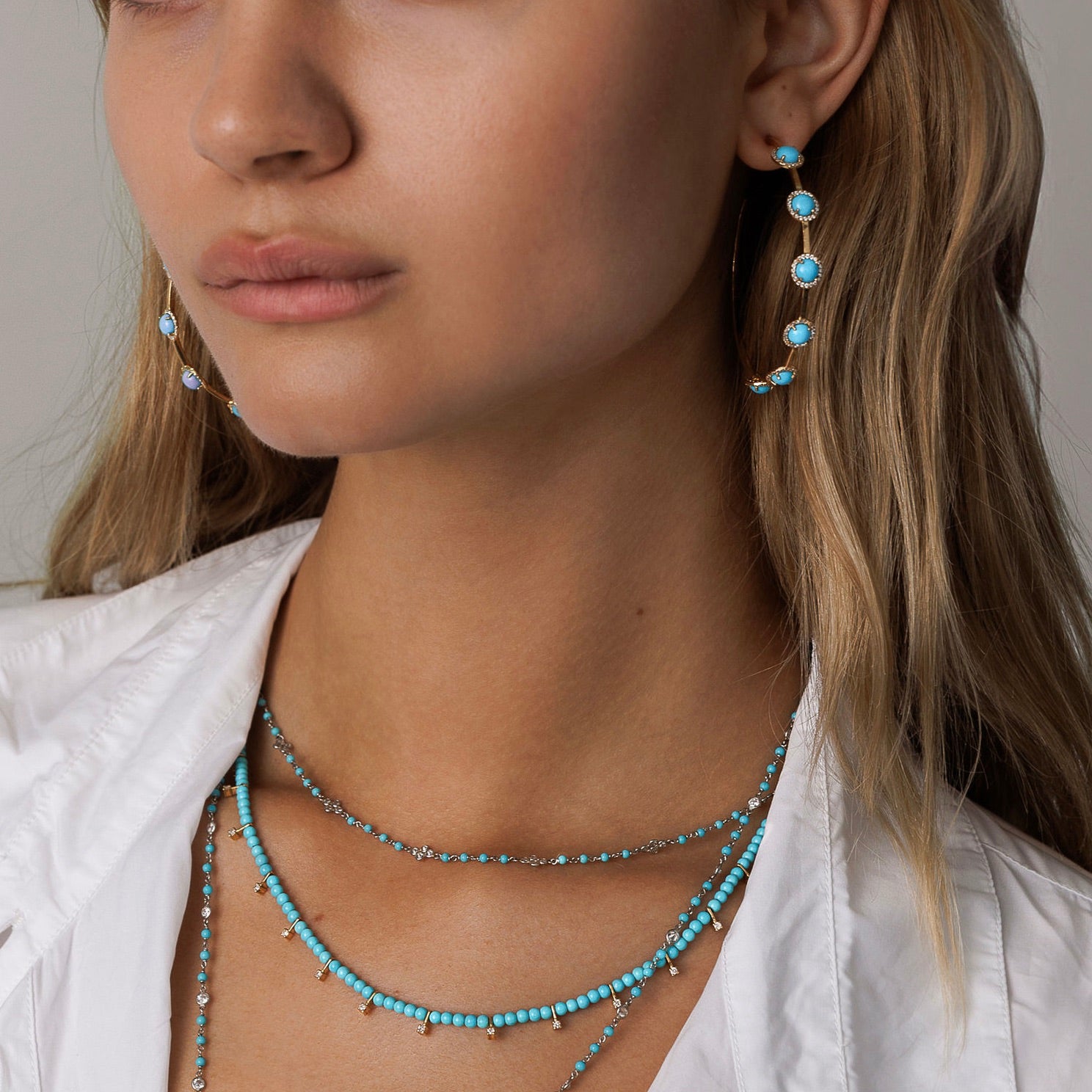
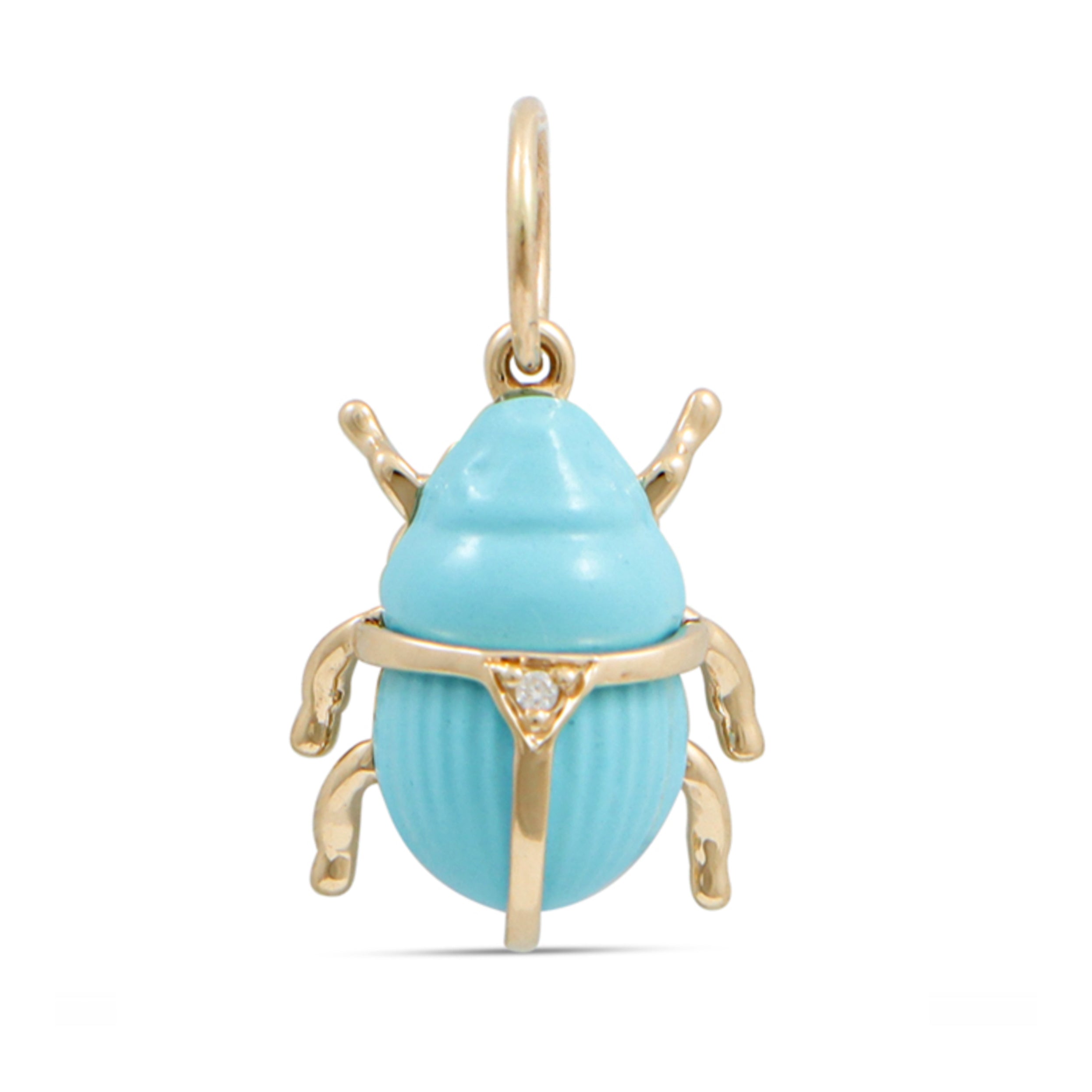
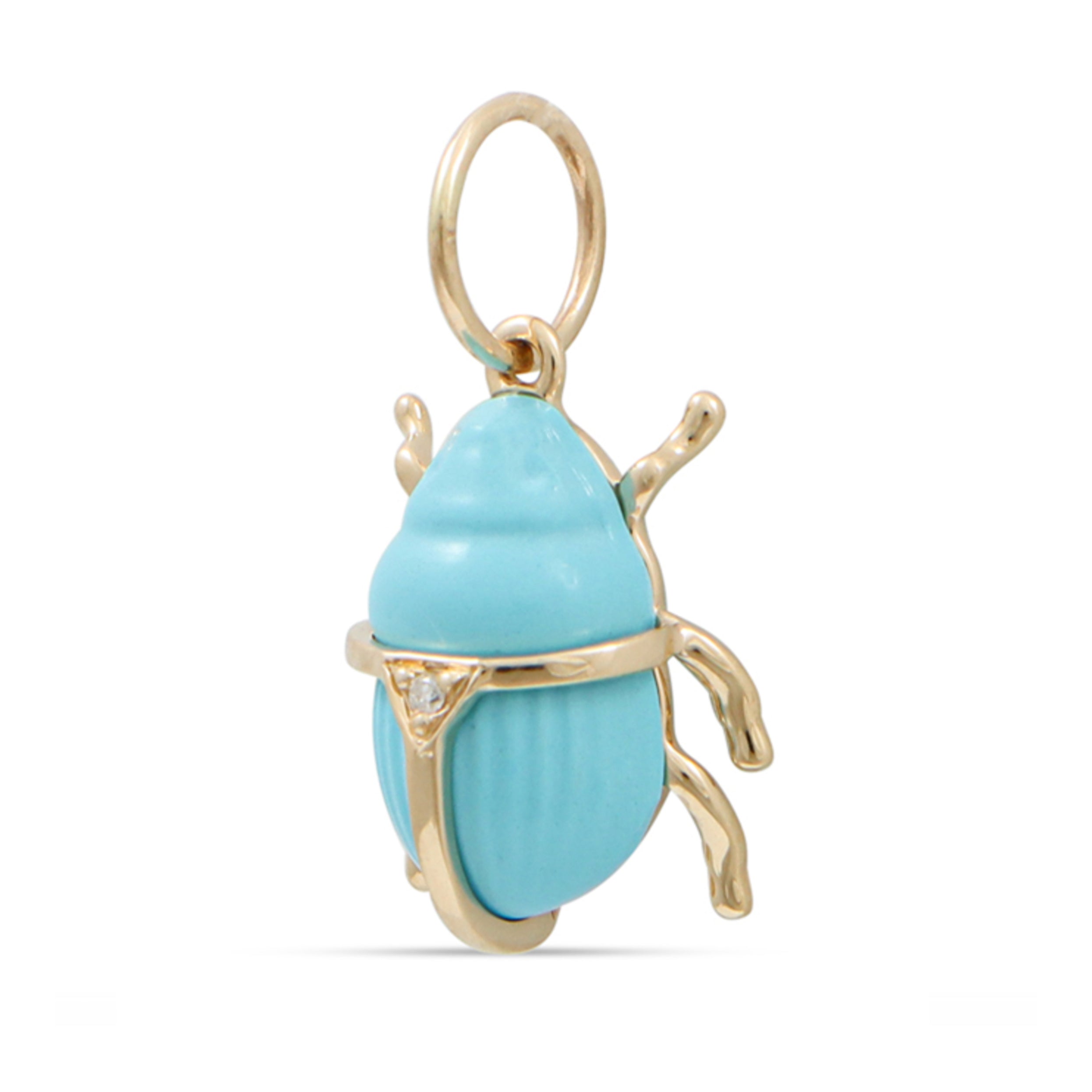
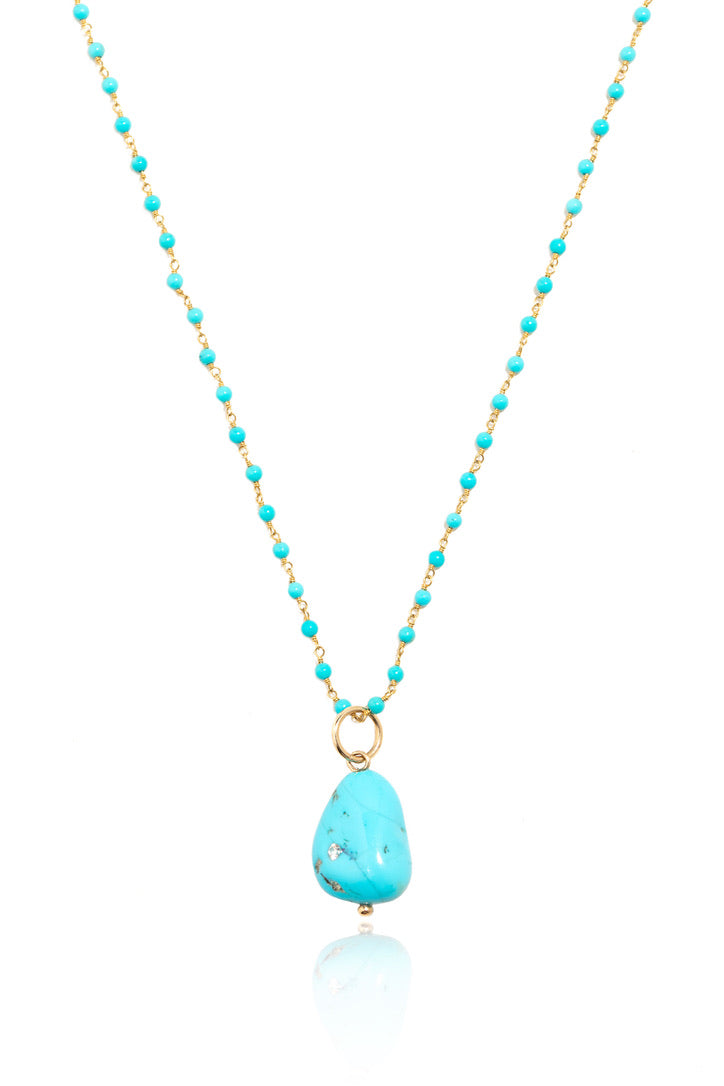
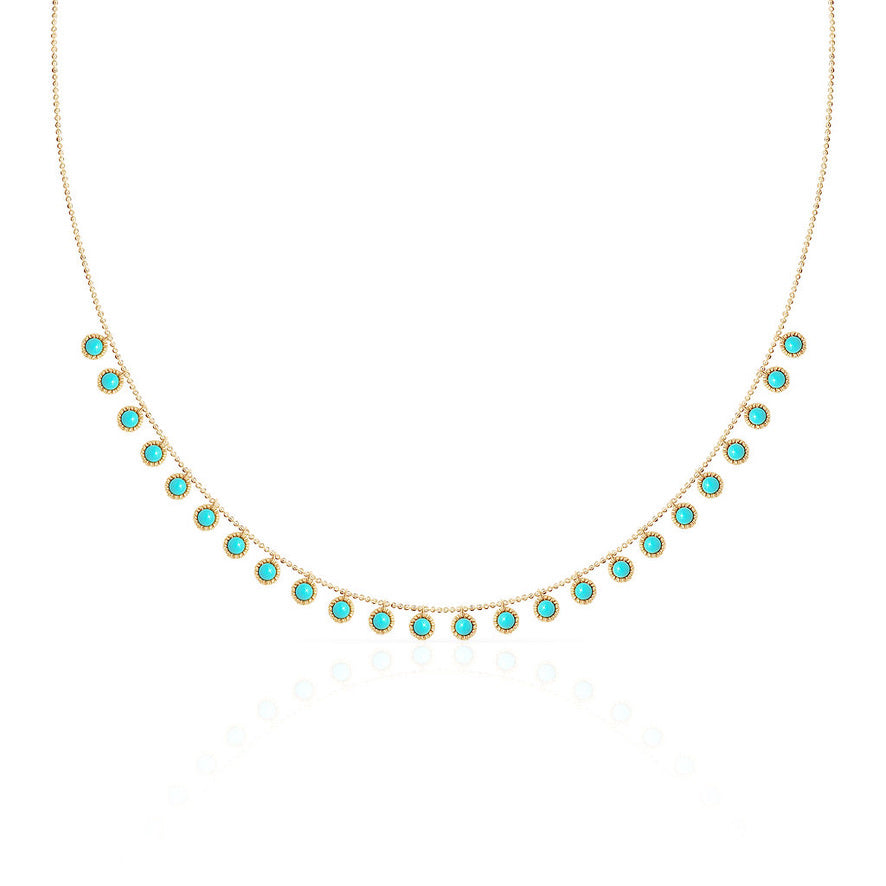
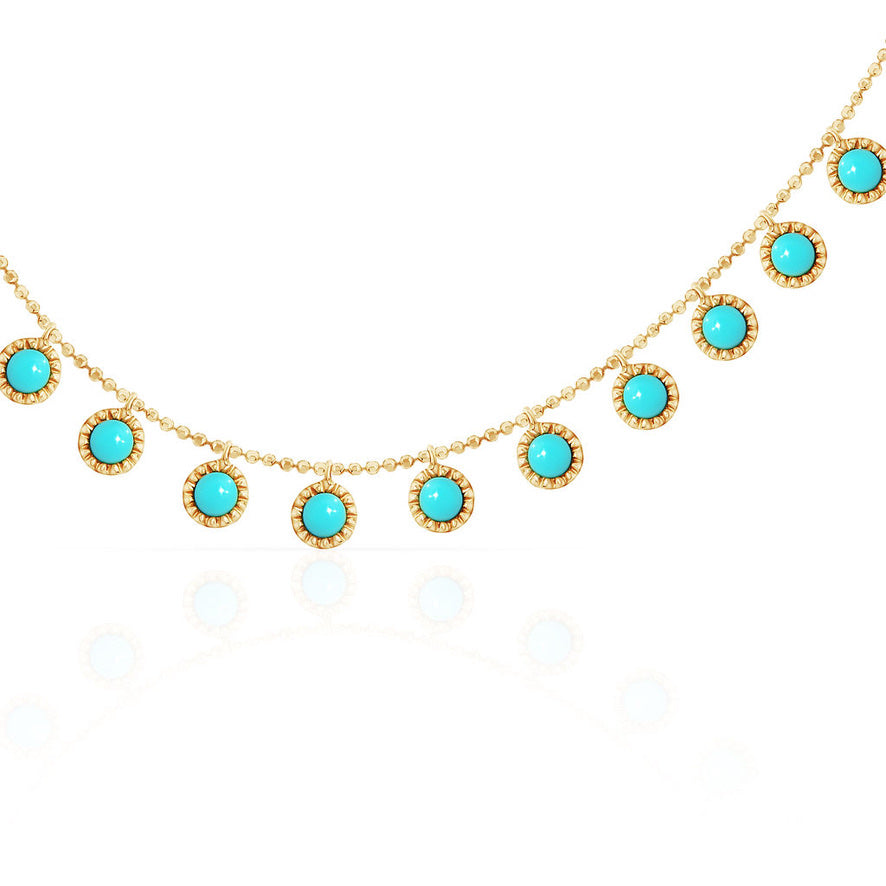
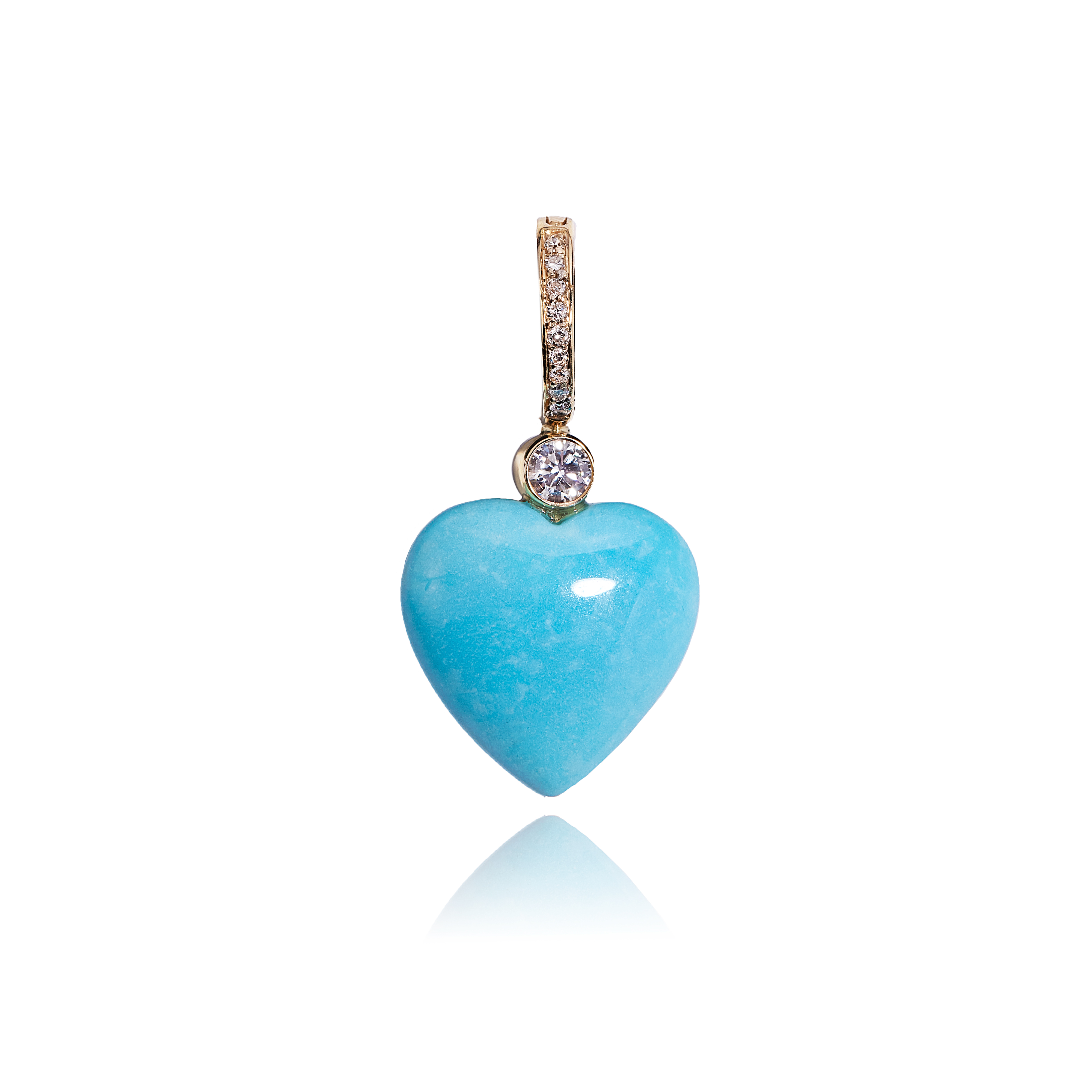
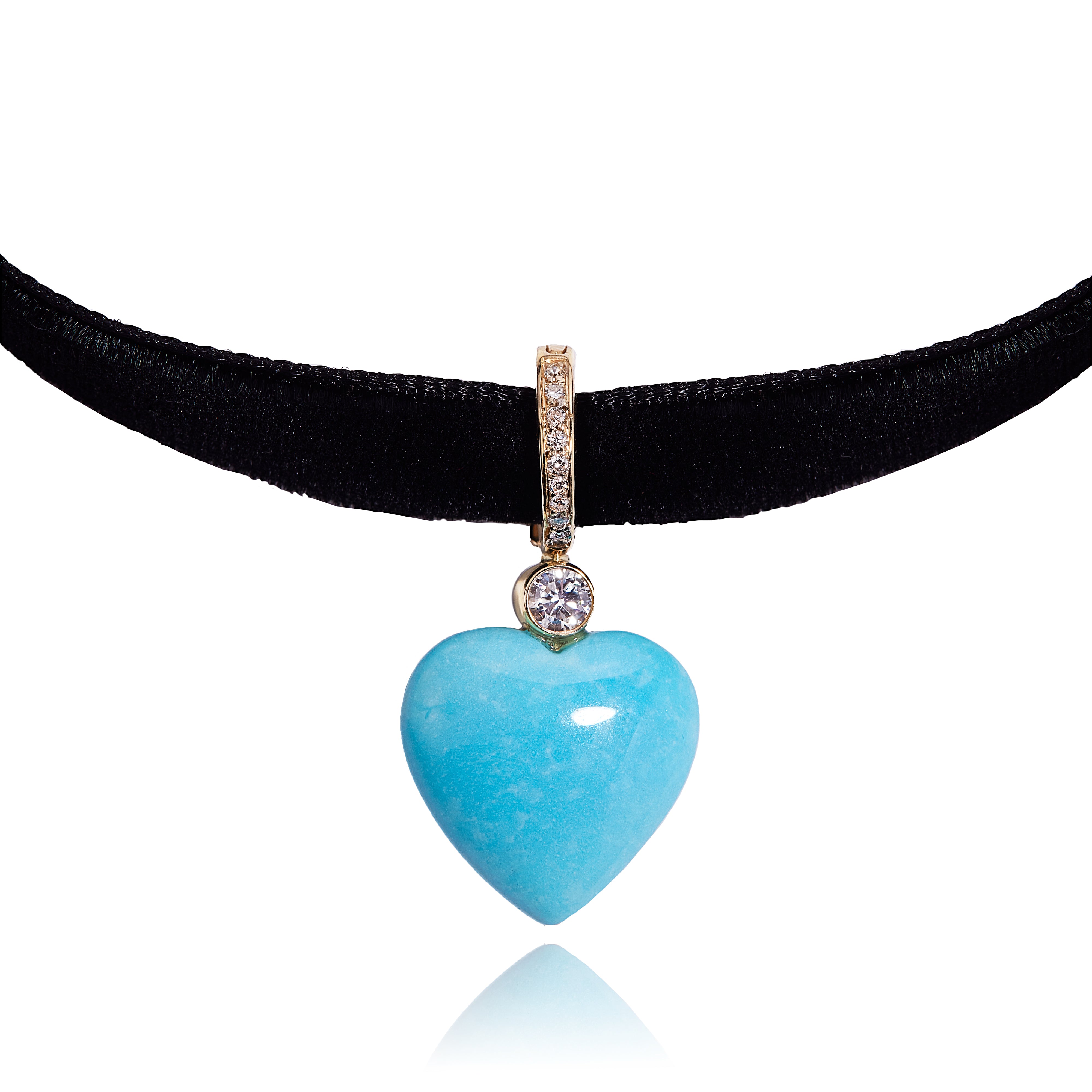
Turquoise set in solid 14K and 18K gold, with natural diamonds. Some pieces use Sleeping Beauty turquoise, mined in Arizona from a source that closed in 2012 and hasn't reopened since. What's set here is what was mined before that.
Turquoise varies enormously by source, in hardness, colour and whether it needs treatment to be usable in jewelry at all. Sleeping Beauty turquoise is known in the trade for often being hard enough to set untreated, which is part of why it commands a premium over turquoise that requires resin stabilization to hold together. For gold purity, see necklaces. For the enamel work alongside the turquoise pieces here, see pendants and charms.
Sleeping Beauty Turquoise
The Sleeping Beauty mine, in Arizona, closed in 2012. It was known for producing some of the most consistently sky-blue turquoise in the world, with little to no matrix, the dark veining that runs through most other turquoise. Once the mine closed, the remaining supply became finite in a way few gemstones ever are — no more will be mined, ever, from that specific source. What's set in Sleeping Beauty pieces here was sourced before or shortly after the closure. As existing material is used, it becomes harder to source in the same quality, which is the case for the whole trade, not particular to any one jeweller.
Types of Turquoise
Turquoise forms differently depending on where it's mined, and the differences show up in hardness, colour and how much treatment the stone needs before it can be set. Persian turquoise, historically the benchmark for pure sky blue, is now extremely scarce. American turquoise comes from several sources across Arizona, Nevada and New Mexico, each with a distinct colour range from robin's-egg blue to deep green. Chinese turquoise has become a major modern source, ranging widely in quality. Most turquoise sold today, regardless of source, is stabilized: treated with a resin under pressure to harden a stone that would otherwise be too soft and porous for jewelry. This isn't a lesser product, it's standard practice for the majority of turquoise on the market. Untreated, natural turquoise exists but is rarer and typically commands a higher price, and Sleeping Beauty material is more often found in this state than most other sources.
Turquoise and Diamond
Every diamond in this collection is natural. Turquoise is typically cut as a cabochon, a smooth polished dome rather than a faceted cut, since the stone's opacity means faceting wouldn't add sparkle the way it does with a transparent gem. The pieces here pair that soft, matte surface against faceted diamonds set around or alongside it, which is a deliberate contrast rather than a default combination.
14K and 18K Gold with Turquoise
Gold purity is fixed regardless of the stone it holds, 58.3% for 14K, 75% for 18K, full explanation on necklaces. Turquoise simply asks more of the metal than a harder stone would.
Turquoise is a relatively soft stone, so the metal around it does more protective work than it would around a diamond. Both purities are represented here; 18K's warmer tone tends to suit the blue-green range of the stone, while 14K's added hardness suits pieces meant for daily wear.
Turquoise FAQs
What is Sleeping Beauty turquoise?
Turquoise from the Sleeping Beauty mine in Arizona, known for a consistent sky-blue colour with little to no matrix veining. The mine closed in 2012 and hasn't reopened, which makes the material finite: no more can be mined from that specific source, only what was already extracted before closure remains in circulation.
Is turquoise natural or treated?
Both exist in the market. Most turquoise sold today is stabilized, treated with resin under pressure to harden a stone that would otherwise be too soft and porous to set. This is standard practice, not a lesser product. Untreated, natural turquoise is rarer and typically more valuable.
What is the difference between turquoise sources?
Turquoise varies by mine in hardness, colour and matrix pattern. Historically, Persian turquoise set the benchmark for pure sky blue with minimal matrix. American sources, including Sleeping Beauty, Kingman and others, range from robin's-egg blue to deep green. Chinese turquoise is a major modern source with wide variation in quality. Origin affects both appearance and price.
Why is turquoise usually cut as a smooth dome rather than faceted?
Turquoise is opaque, so cutting facets into it wouldn't create sparkle the way faceting does on a transparent stone like a diamond. A cabochon cut, a smooth polished dome, shows the stone's colour and any natural pattern to best effect, which is why almost all turquoise jewelry uses this cut rather than a faceted one.
Is turquoise durable enough for daily wear?
With care, yes, though it's softer than diamond or sapphire and can scratch or absorb oils and lotions over time, which can dull its colour. Stabilized turquoise is somewhat more resistant to this than natural, untreated material. Removing turquoise jewelry before swimming, exercising or applying lotion helps it keep its colour longer.
What does turquoise symbolize?
Protection and well-being, a meaning that runs across many cultures that have used the stone historically, from the American Southwest to ancient Persia and Egypt. It's commonly given as a gift marking travel, a new chapter, or simply as a piece meant to be worn often rather than saved for occasions.