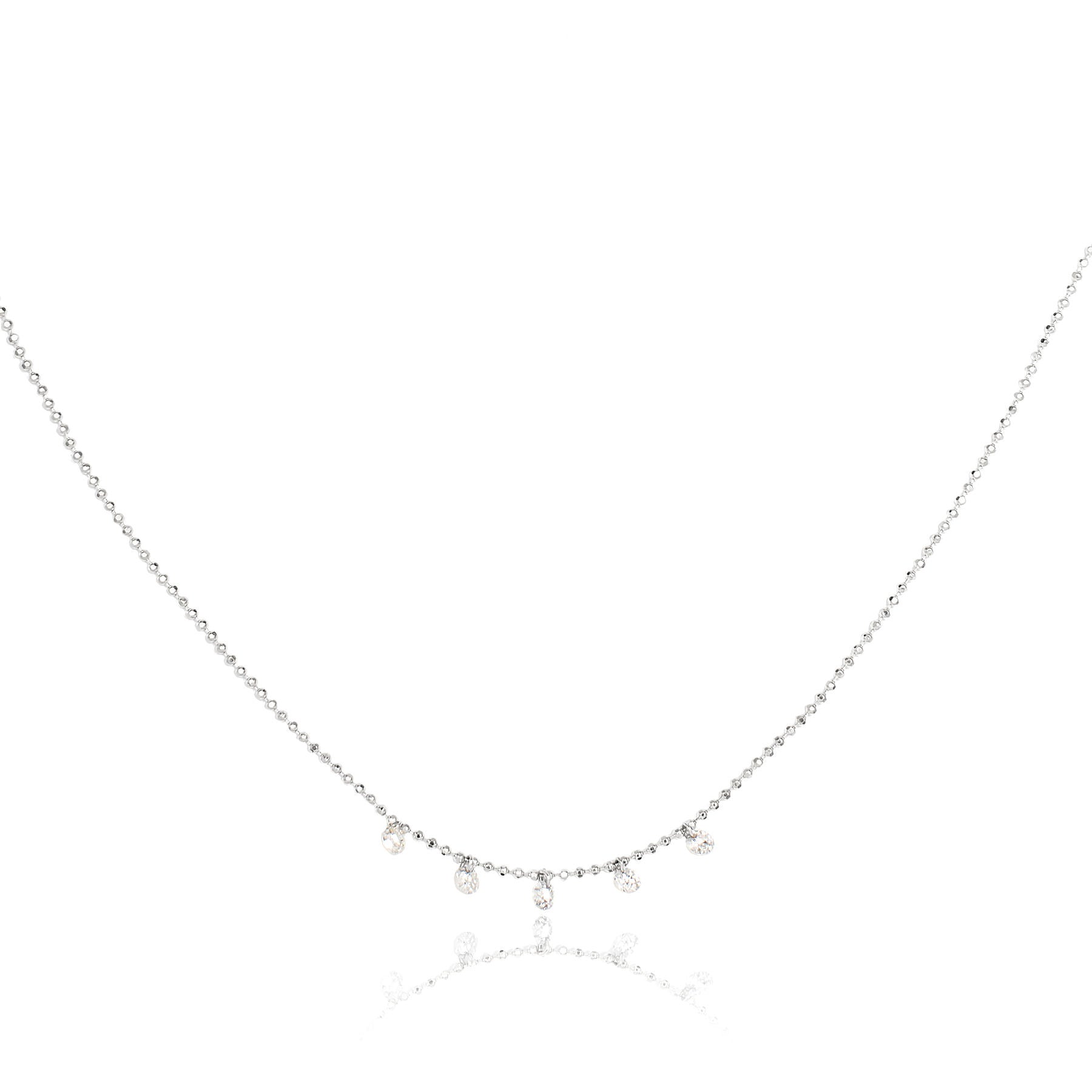
Floating Diamond Necklaces & Earrings

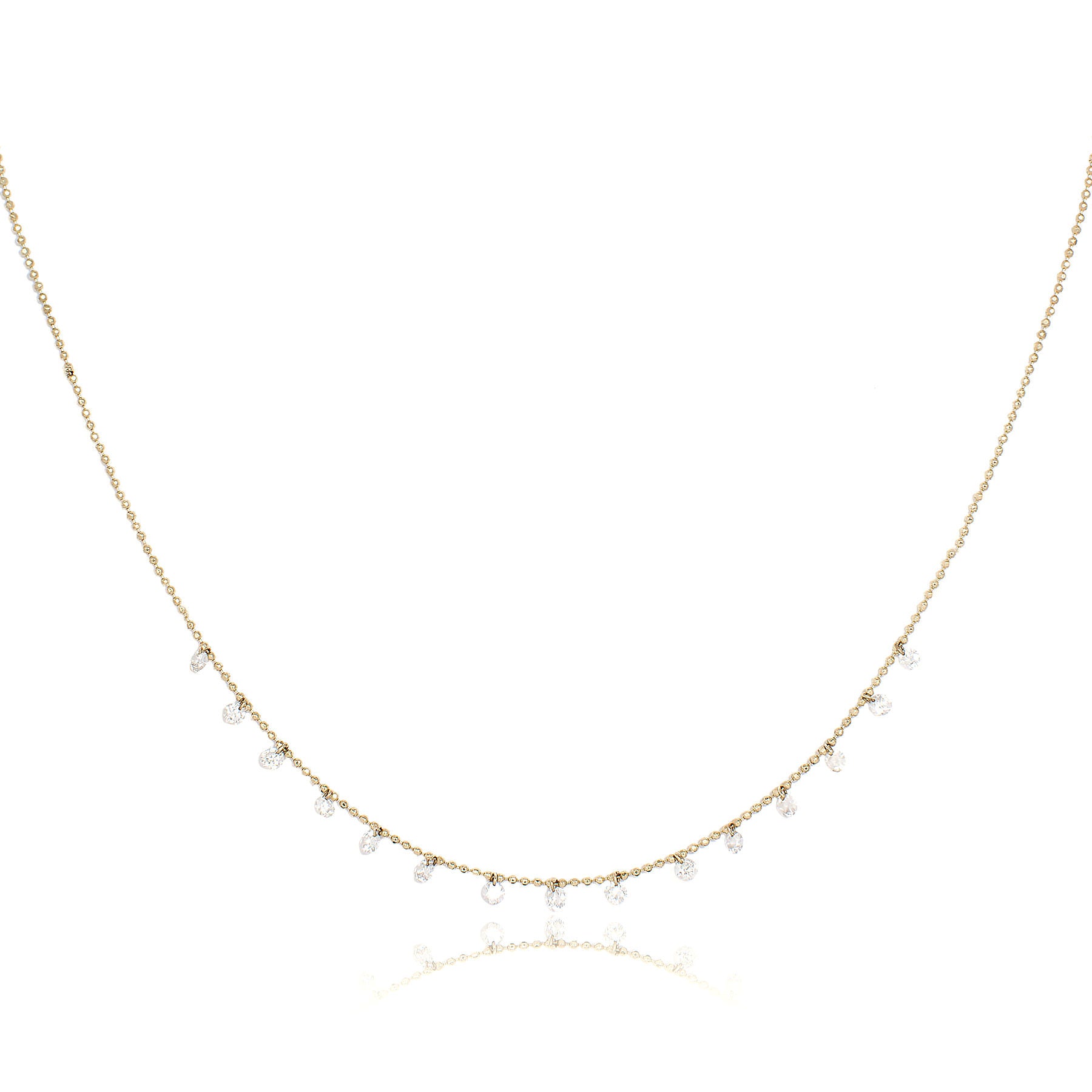
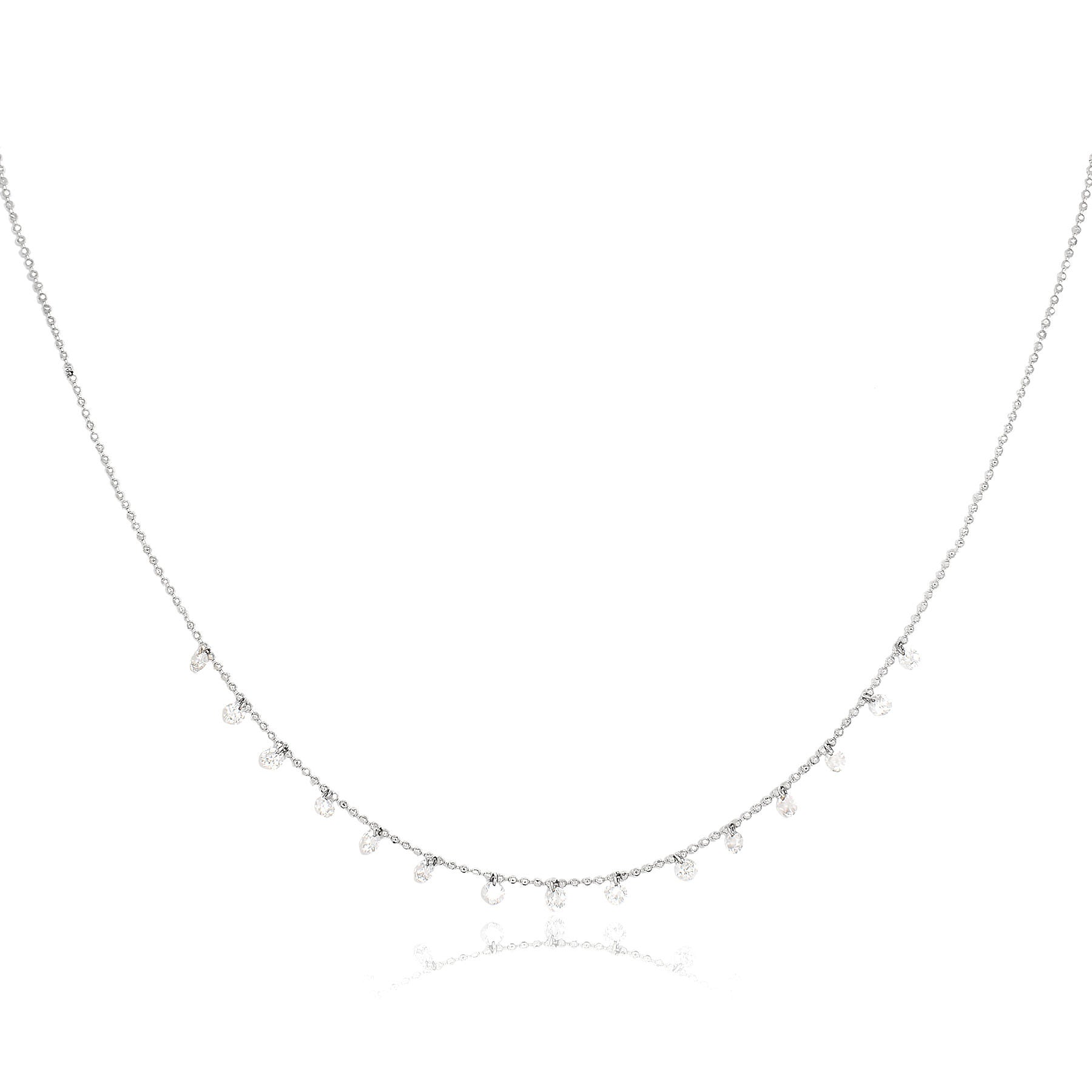
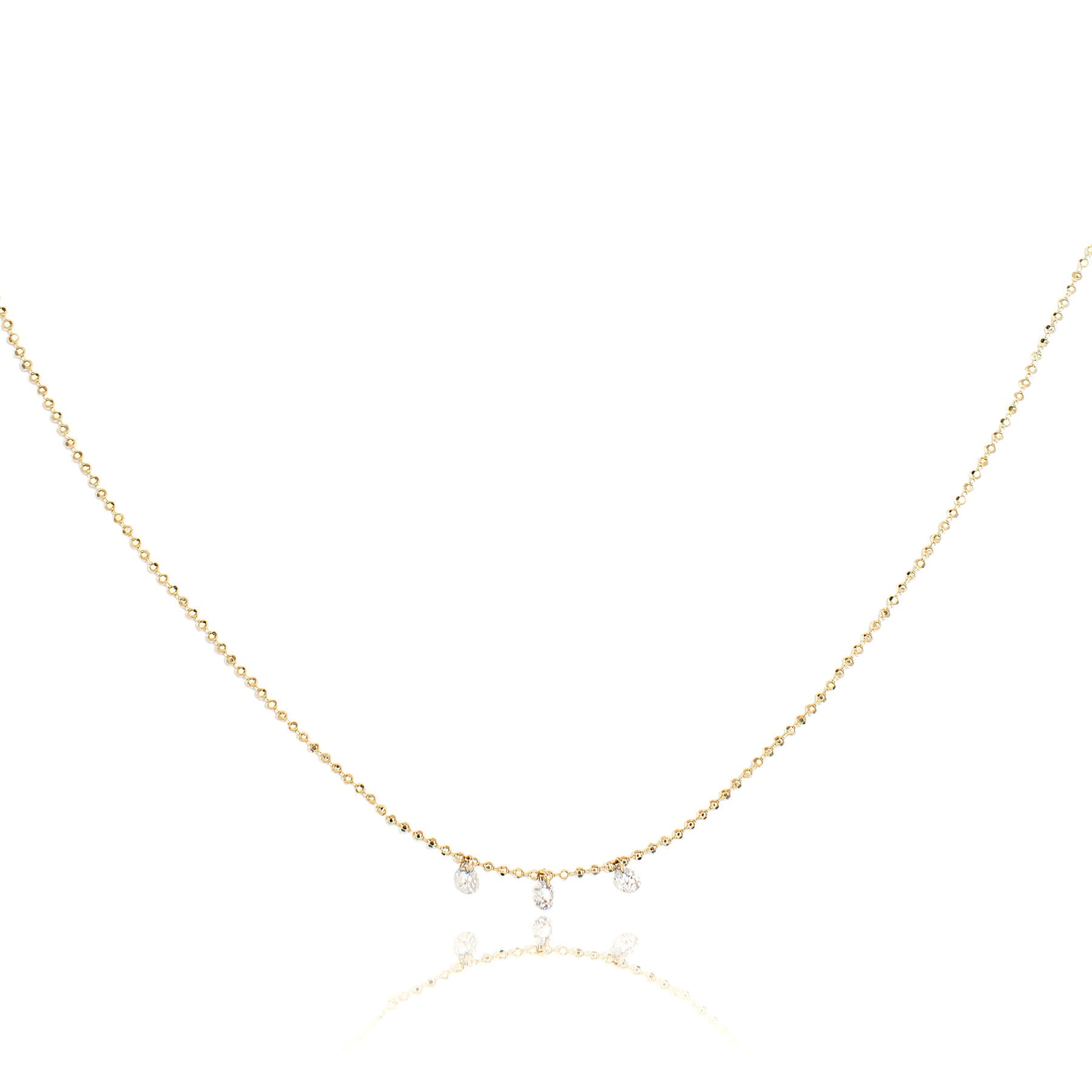
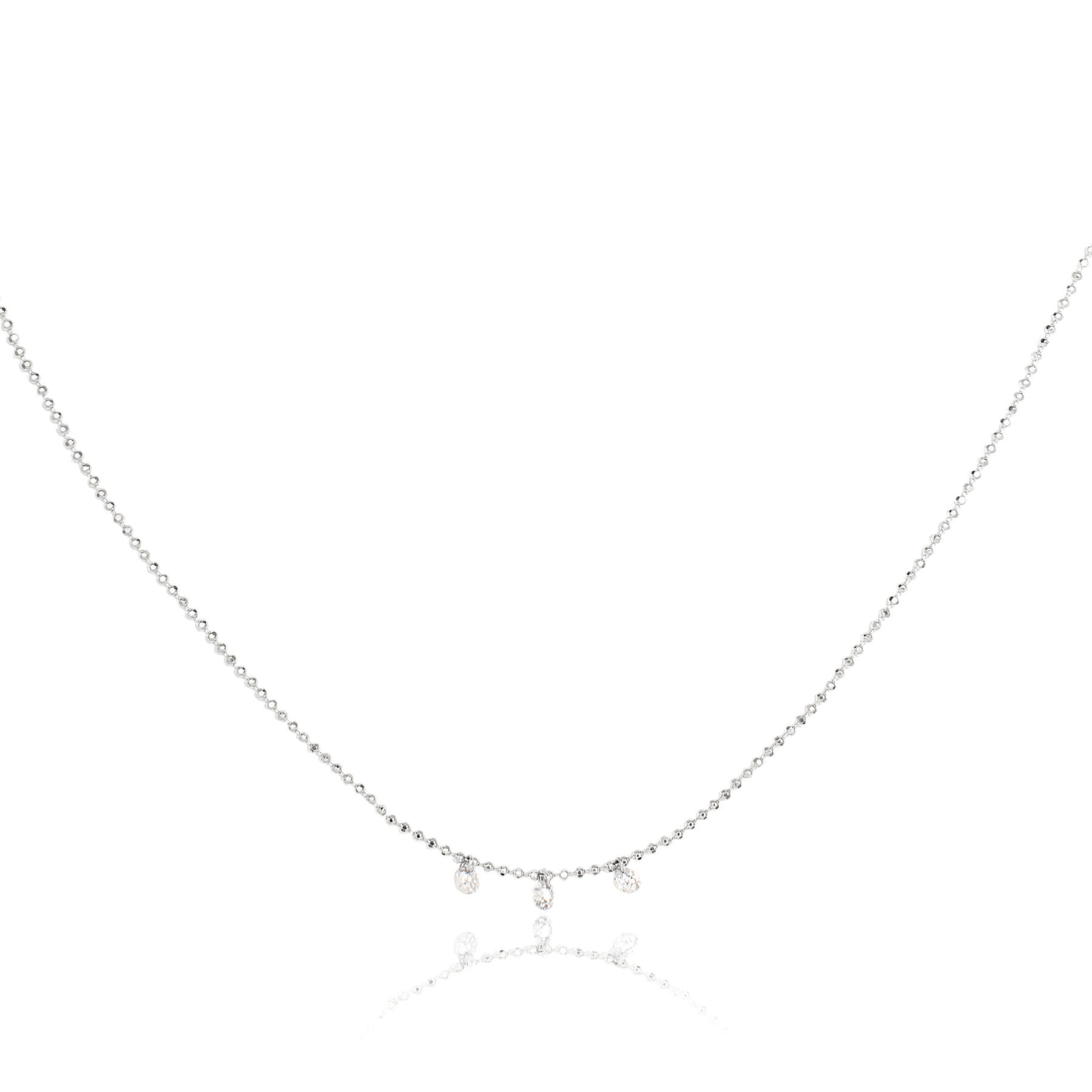
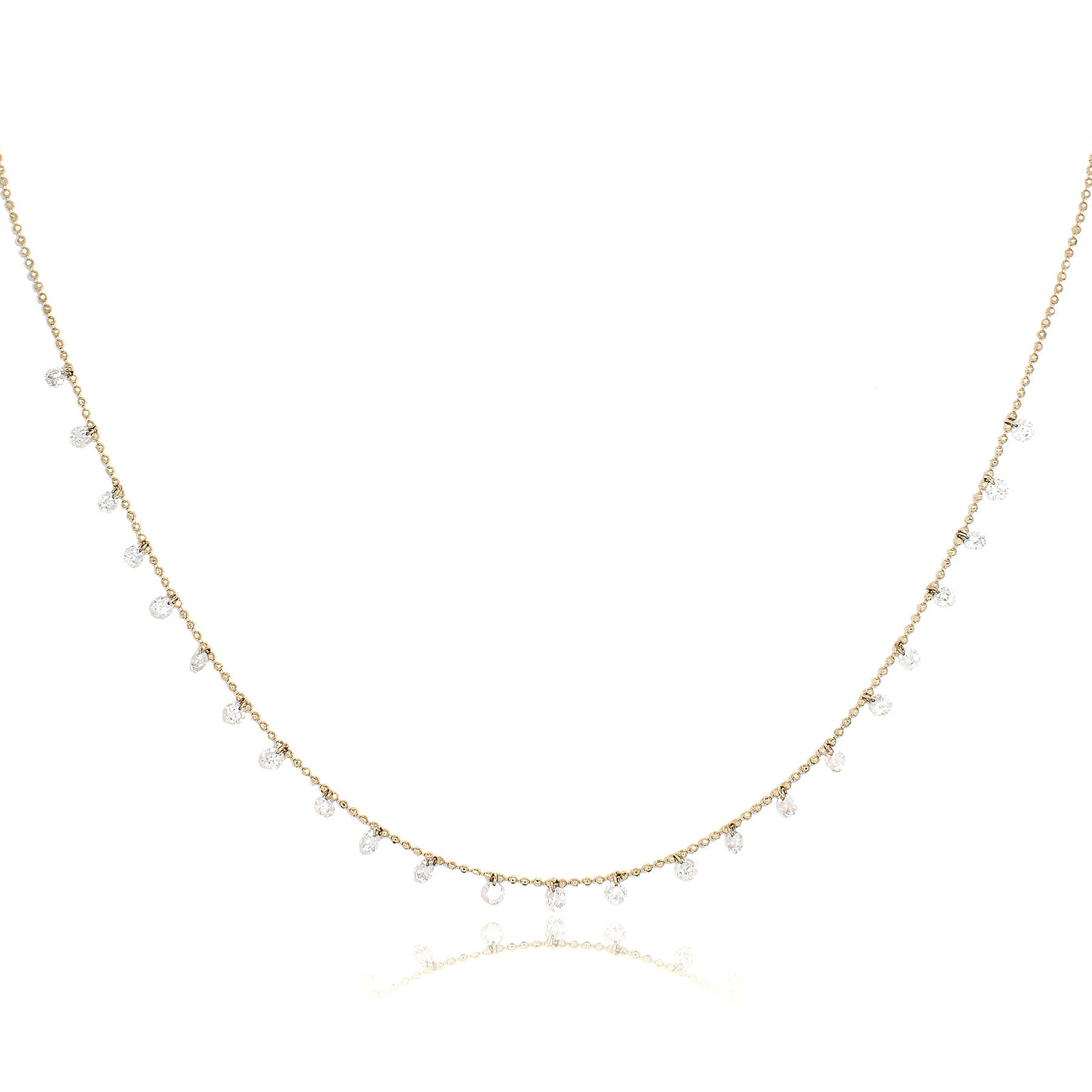
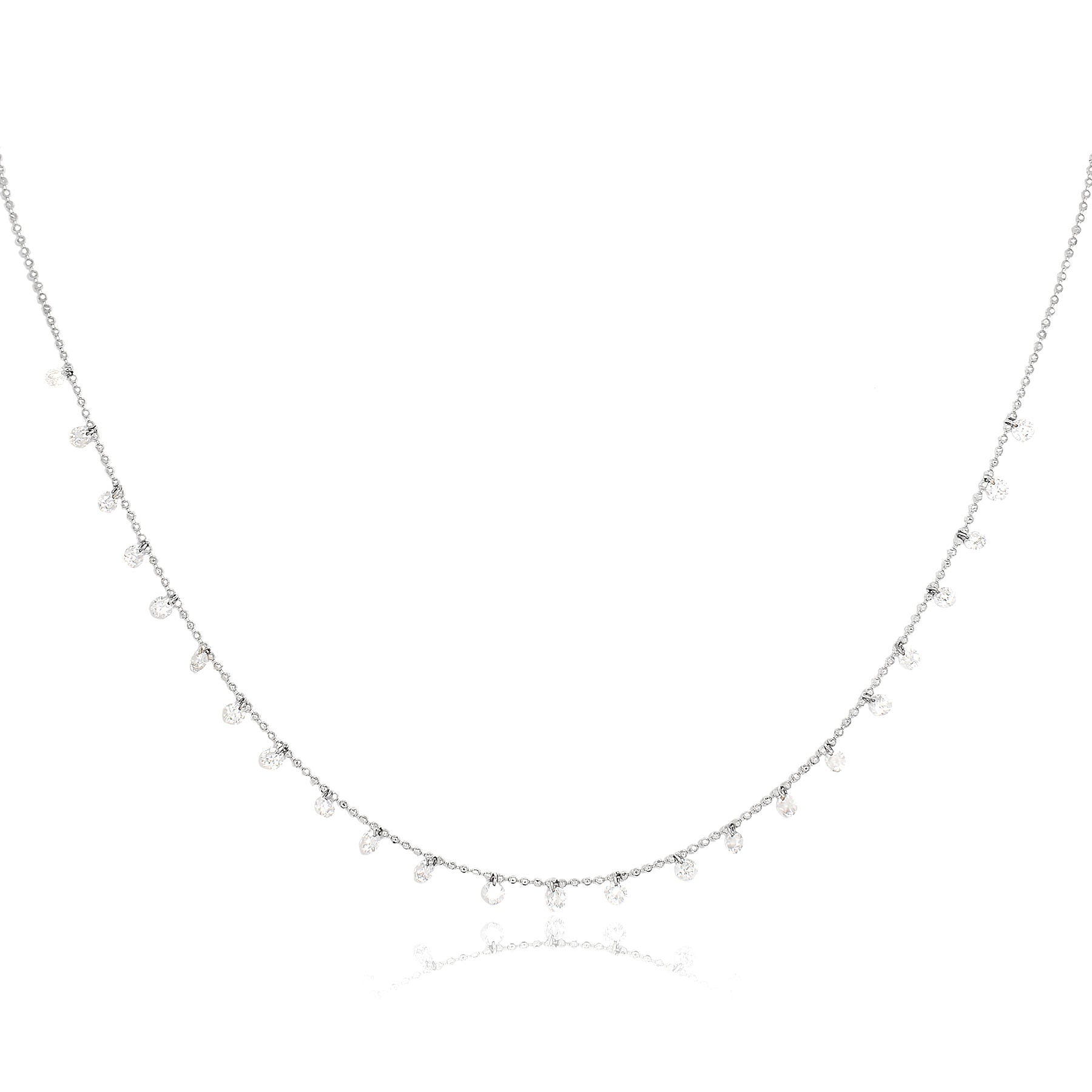
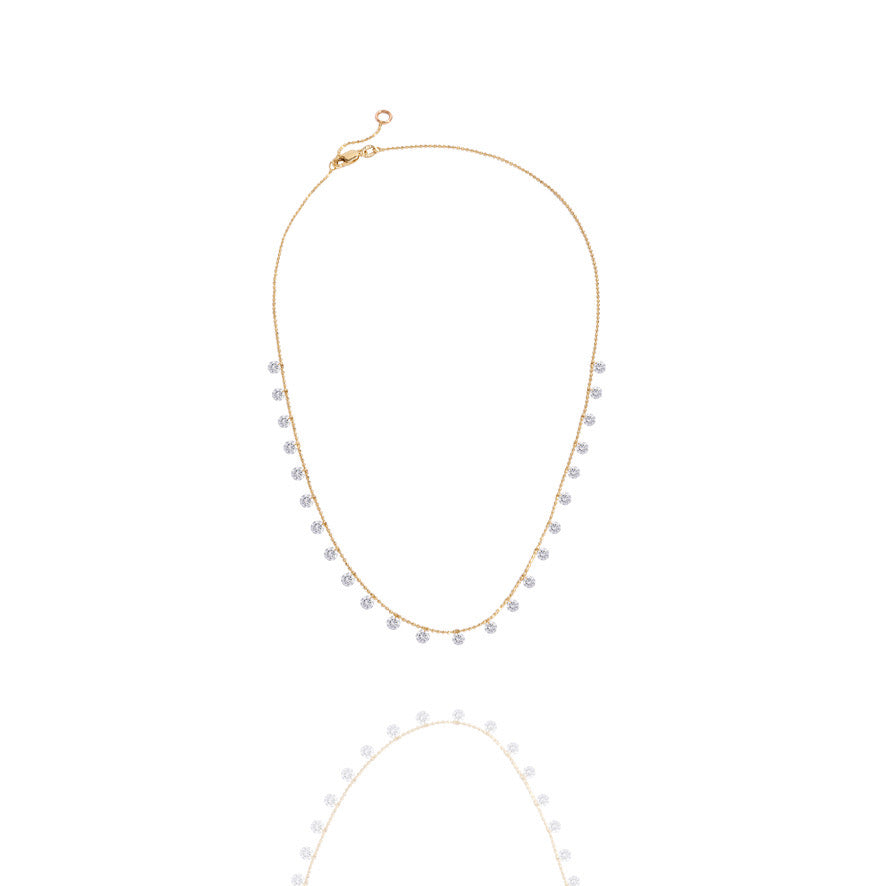
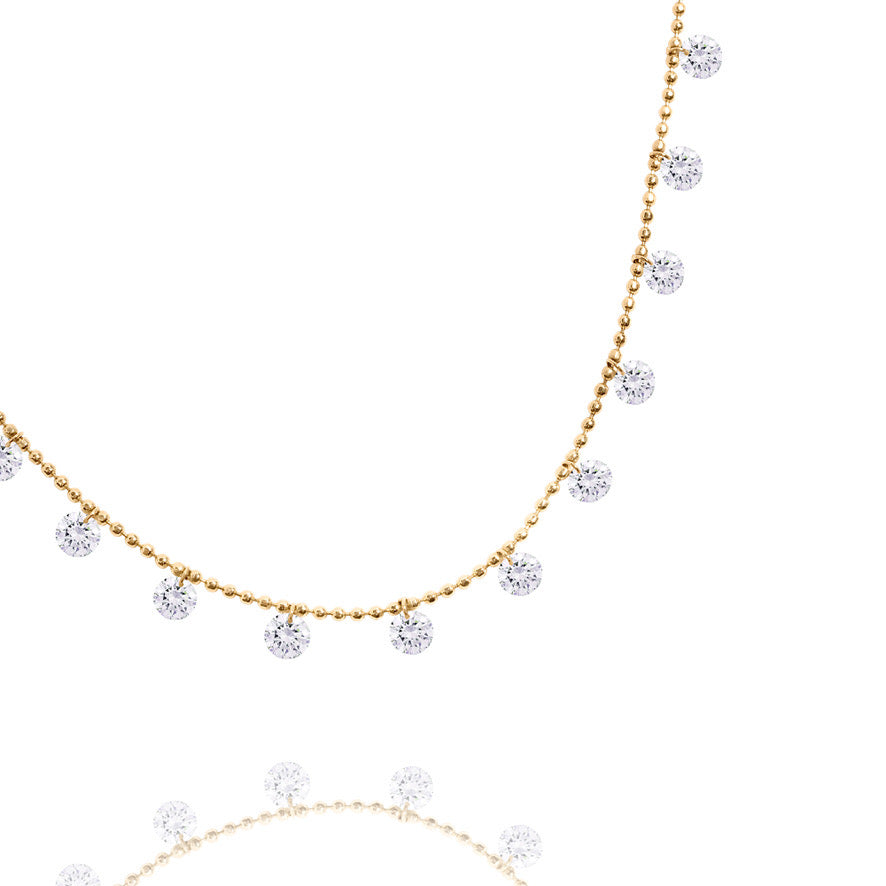
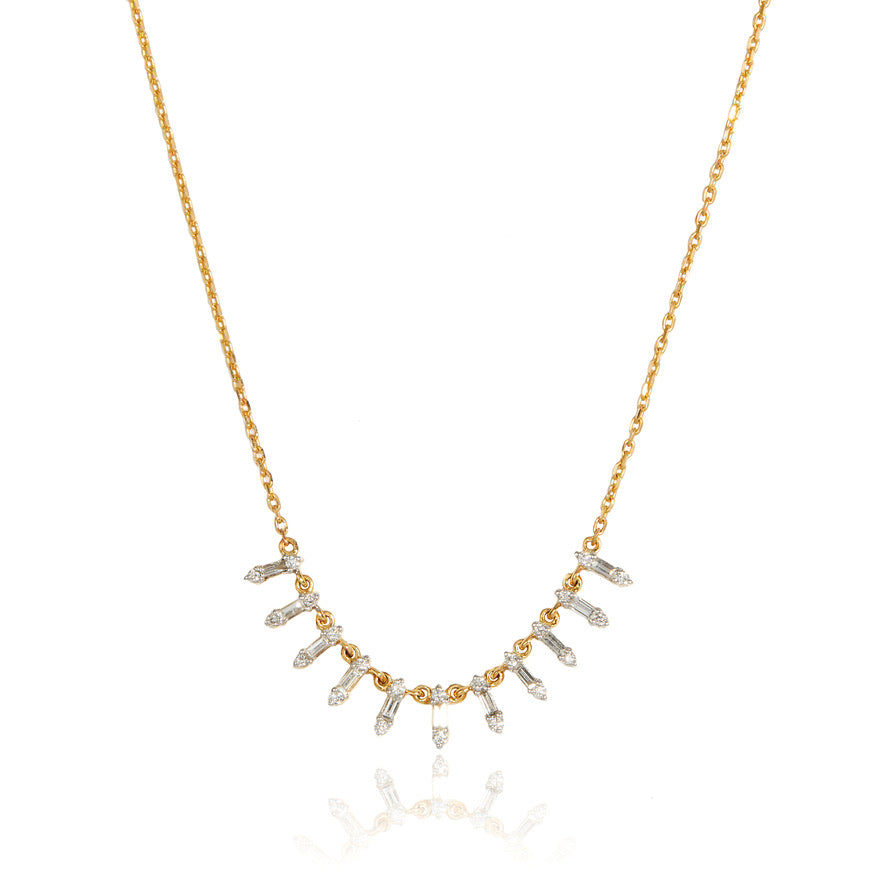
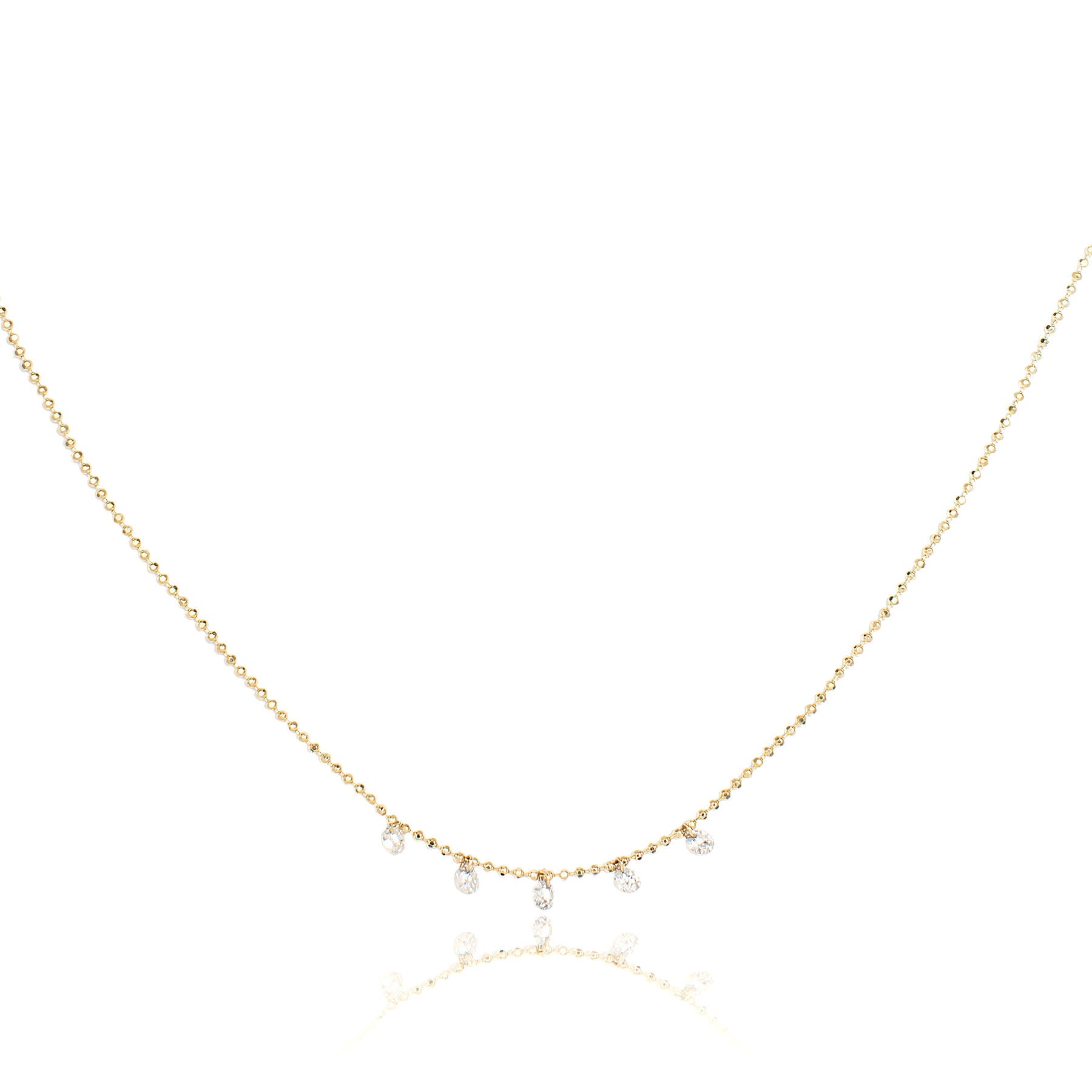
Diamonds set to appear suspended in the chain itself, with no visible prong or bezel around them. Solid 14K and 18K gold, natural diamonds throughout the collection with one labeled exception. Also called station necklaces, since the stones sit at intervals along the length rather than at a single point.

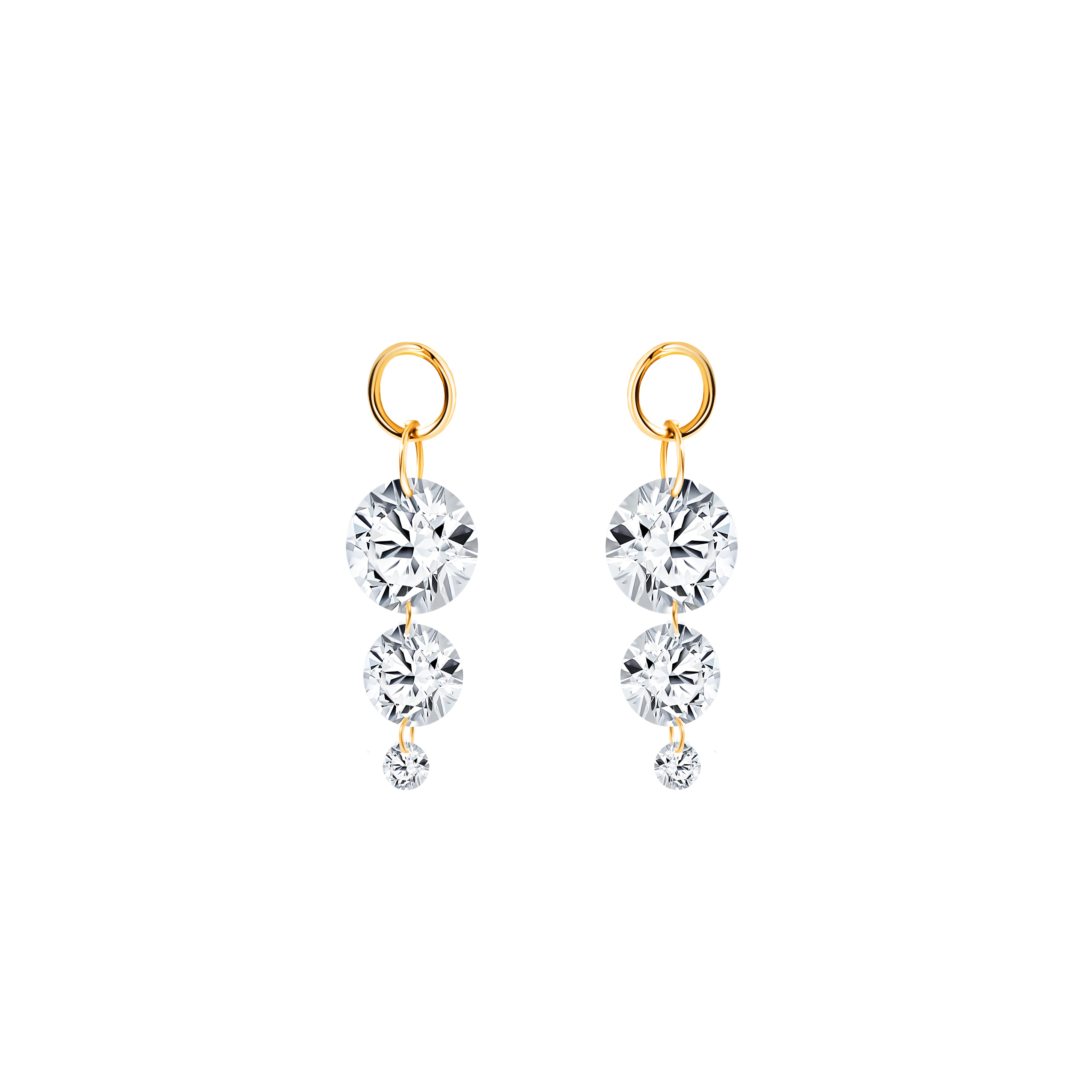
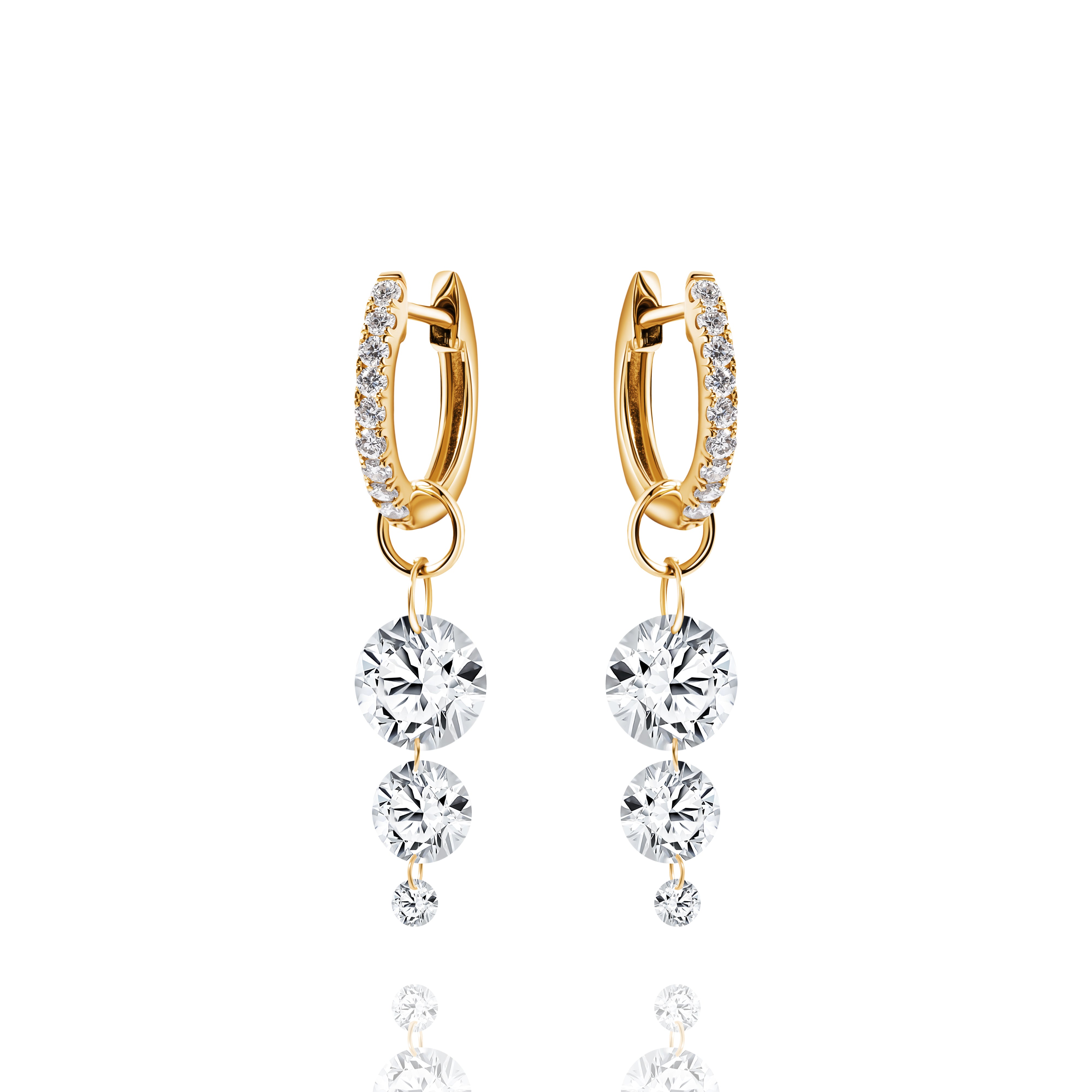
A floating setting cuts a channel or drilled hole directly into the metal and sets the diamond flush into it, so there's nothing standing between the stone and the light reaching it. That's the mechanical reason these read as brighter than a comparable stone in a raised prong setting, not just a styling choice. The Celeste line runs the same construction from three diamonds to twenty-four, so the choice is really about how much light you want rather than a different design each time. For huggies and hoops using a similar floating technique, see earrings and hoops.

Filter
4 Columns List
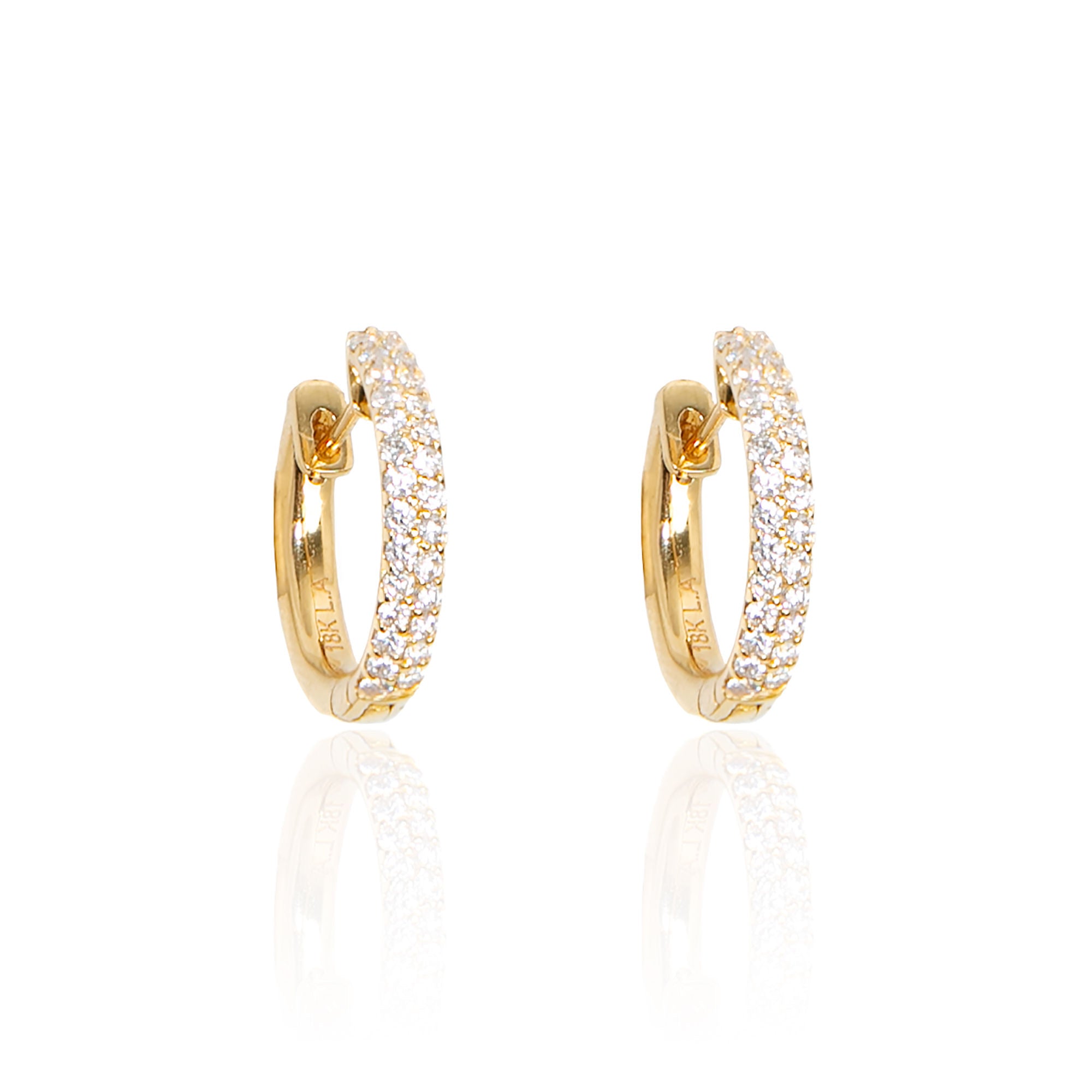
18k YG Pave Diamond Donut Huggies
Regular price $4,880.00
Lab Grown Diamond Studs in 14k Gold
Regular price $12,400.00
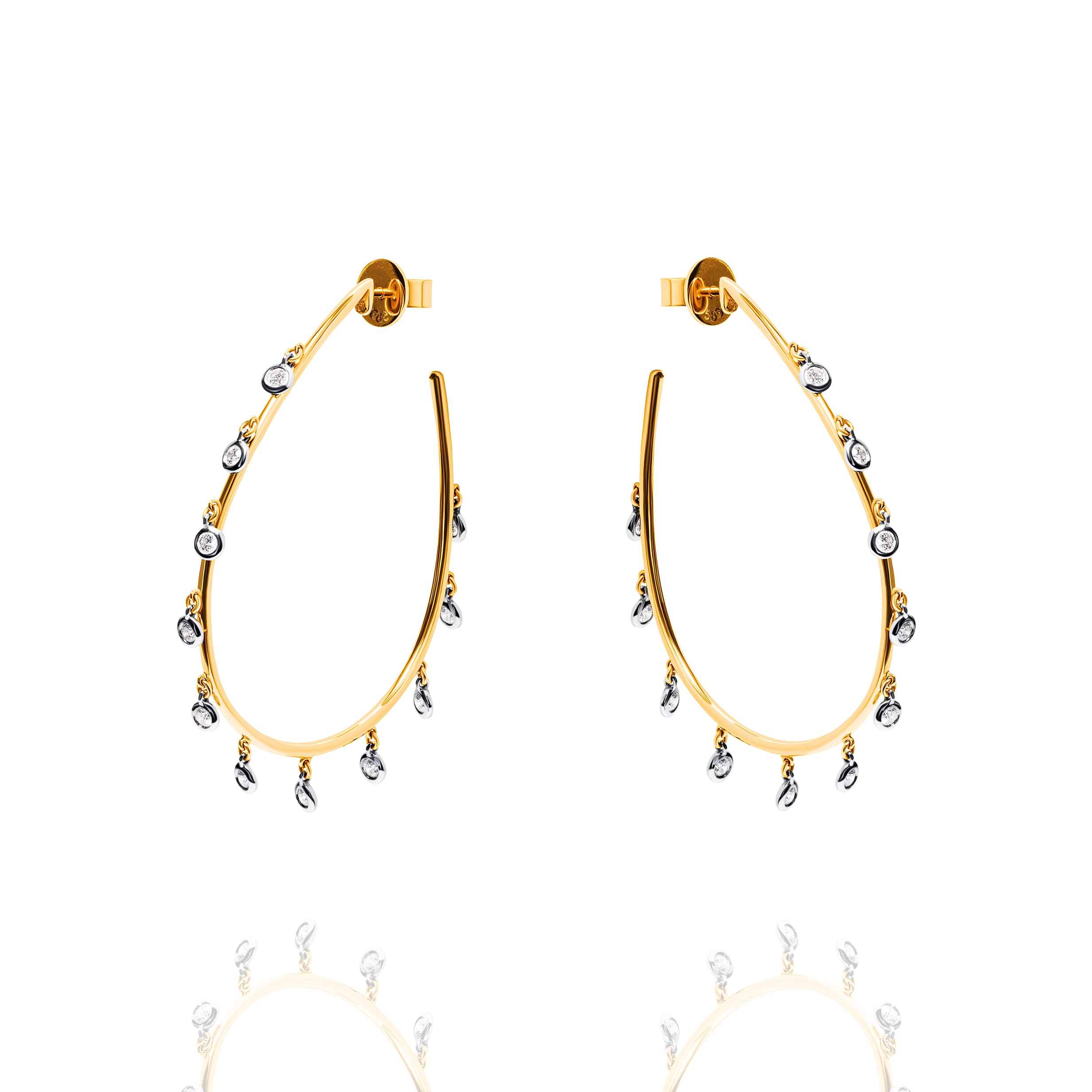
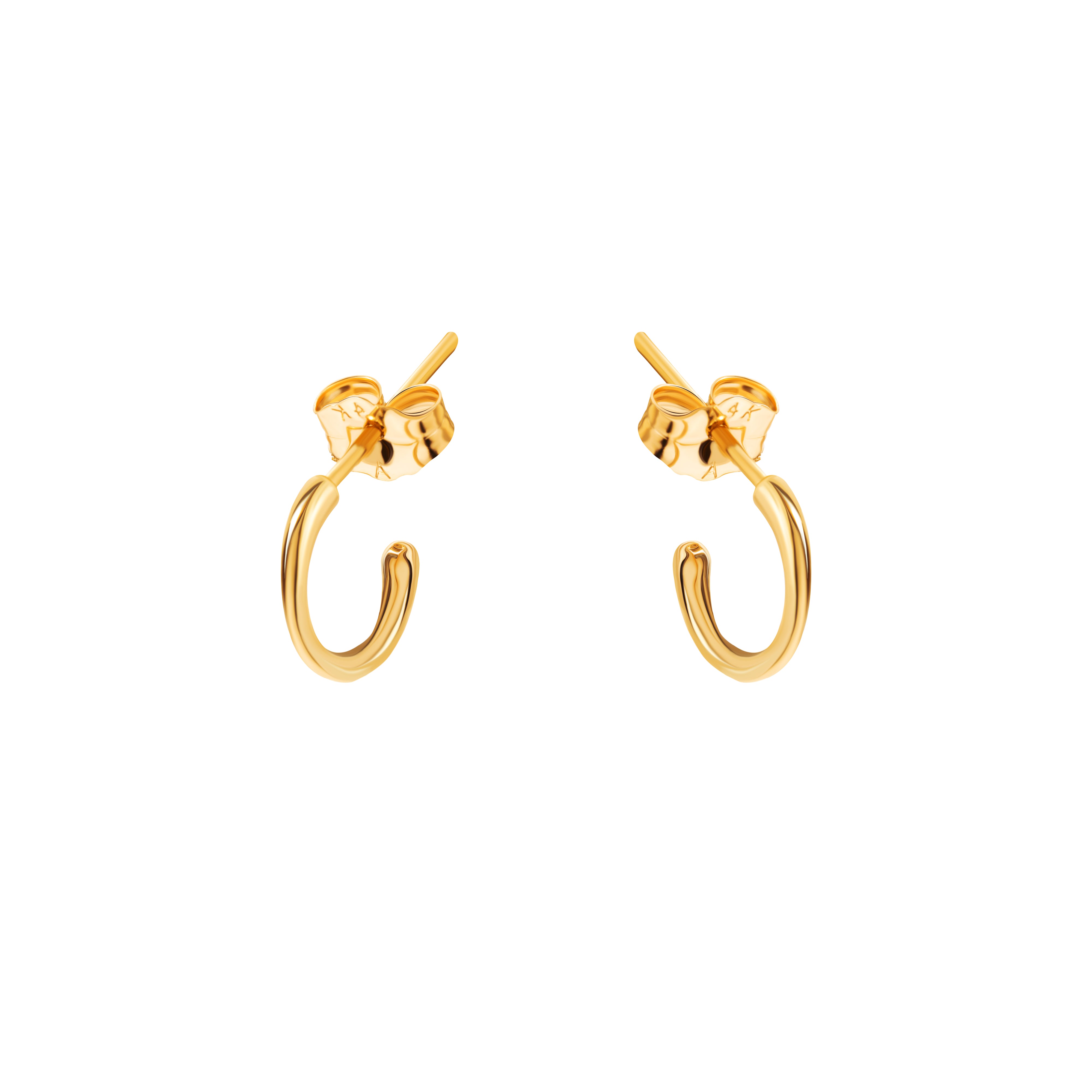
14K Gold Plain Huggie Earrings
Regular price $1,000.00
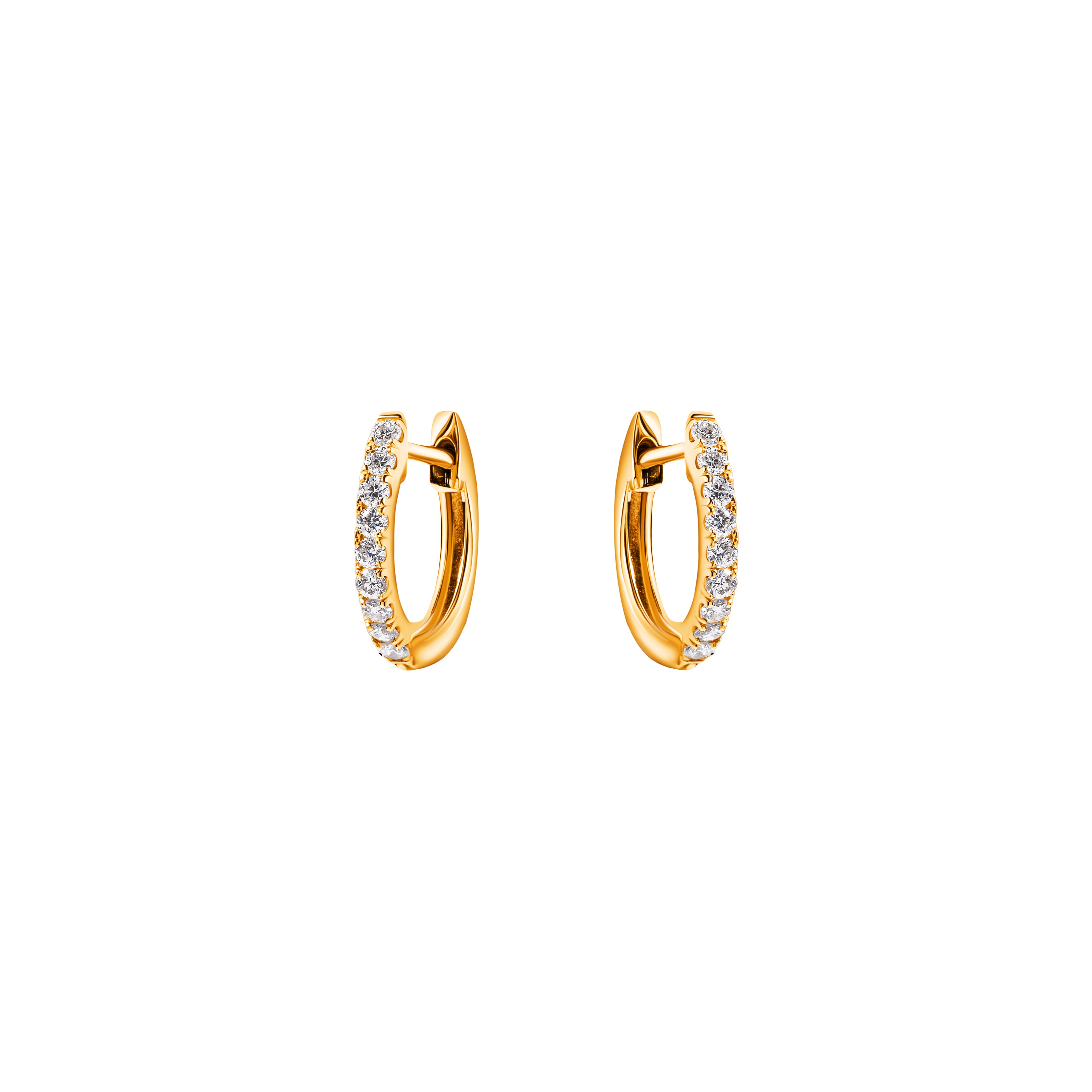
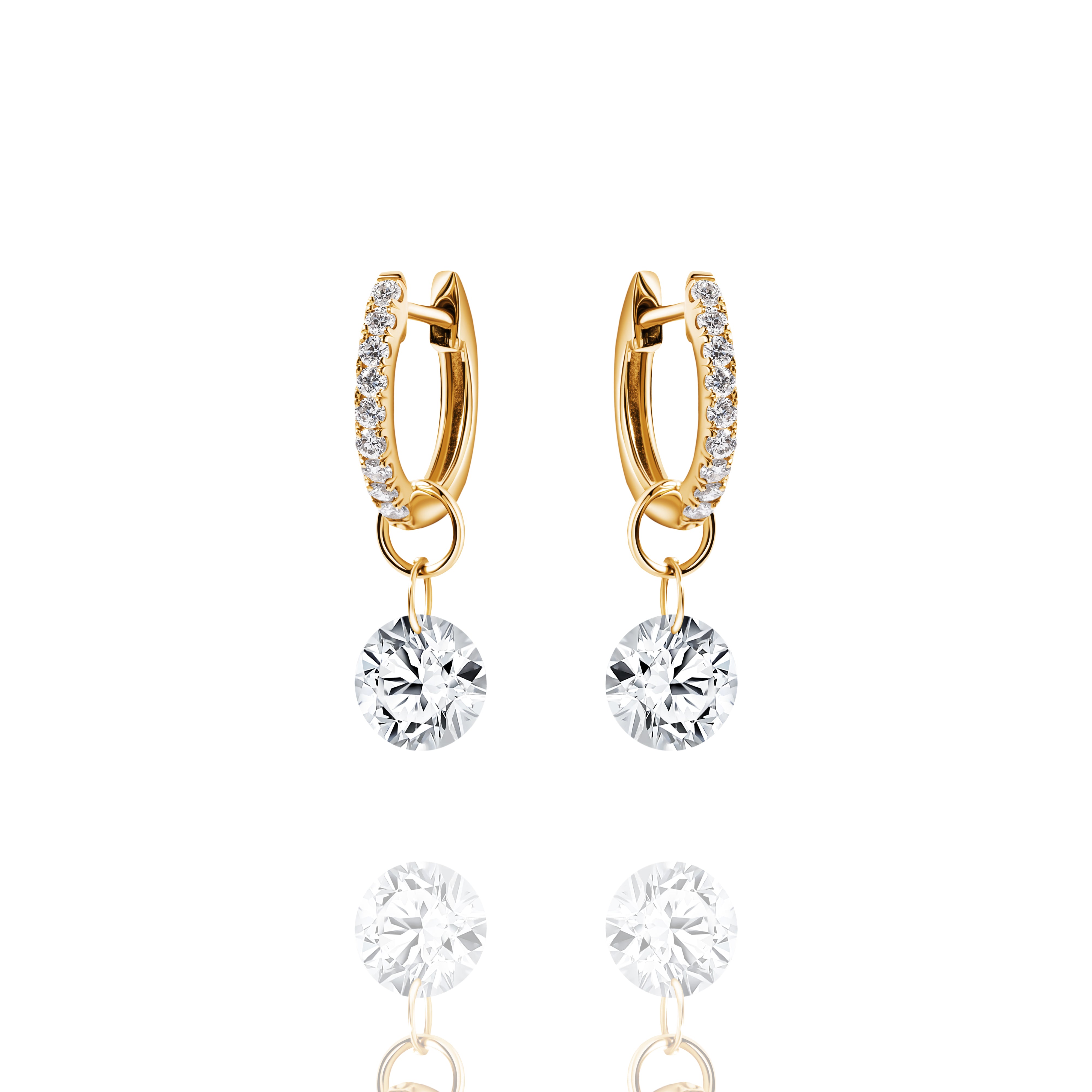
14k Gold Pavé Diamond Huggie Earrings
Regular price $2,080.00
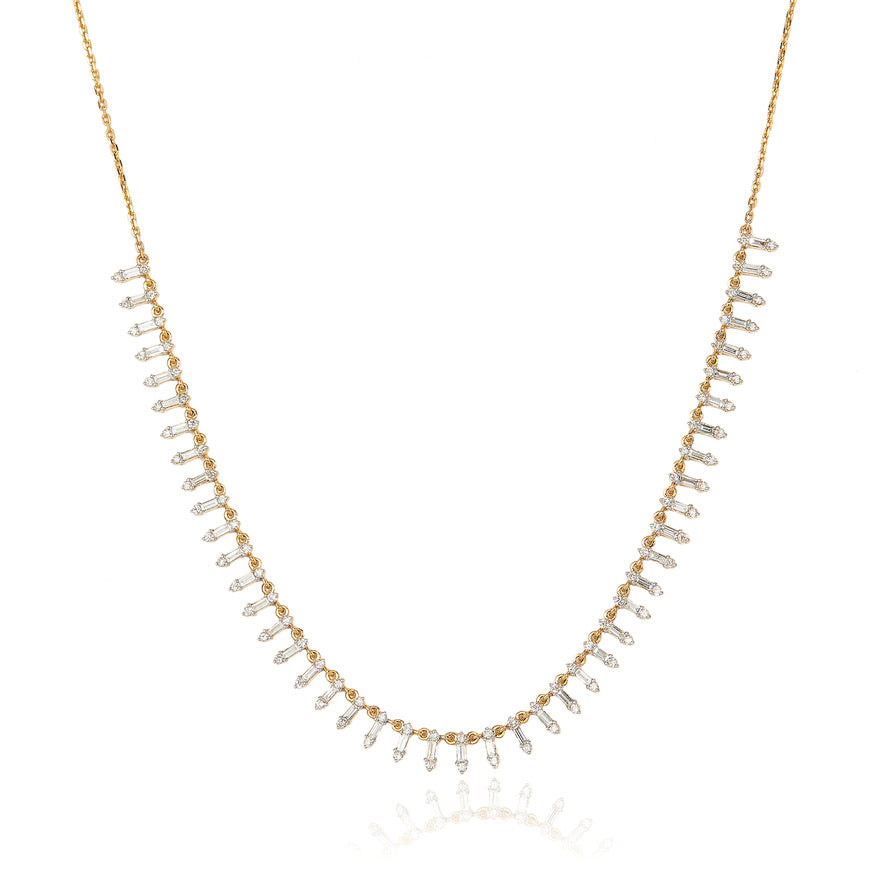
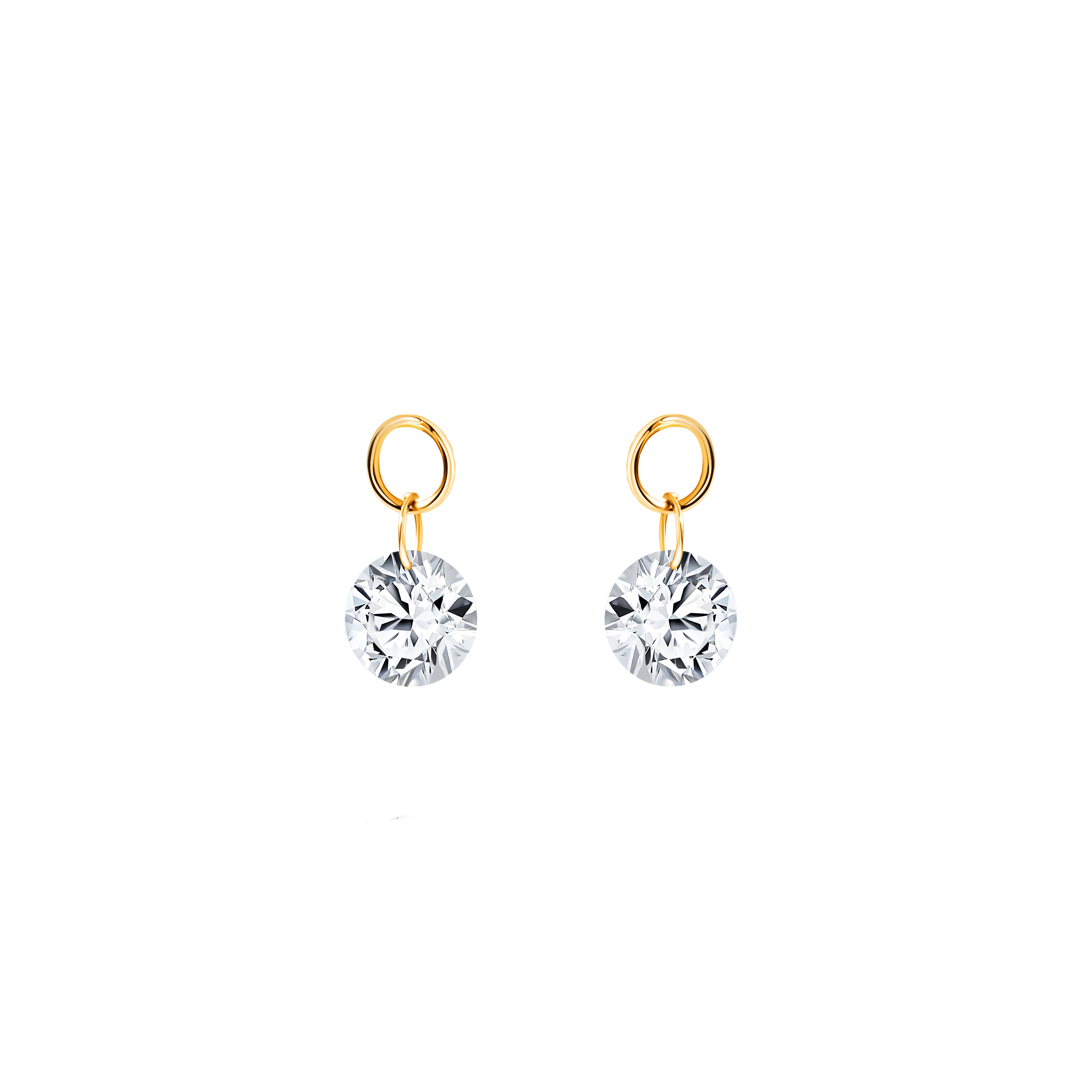
Celeste Triple Floating Diamonds
Regular price $5,120.00
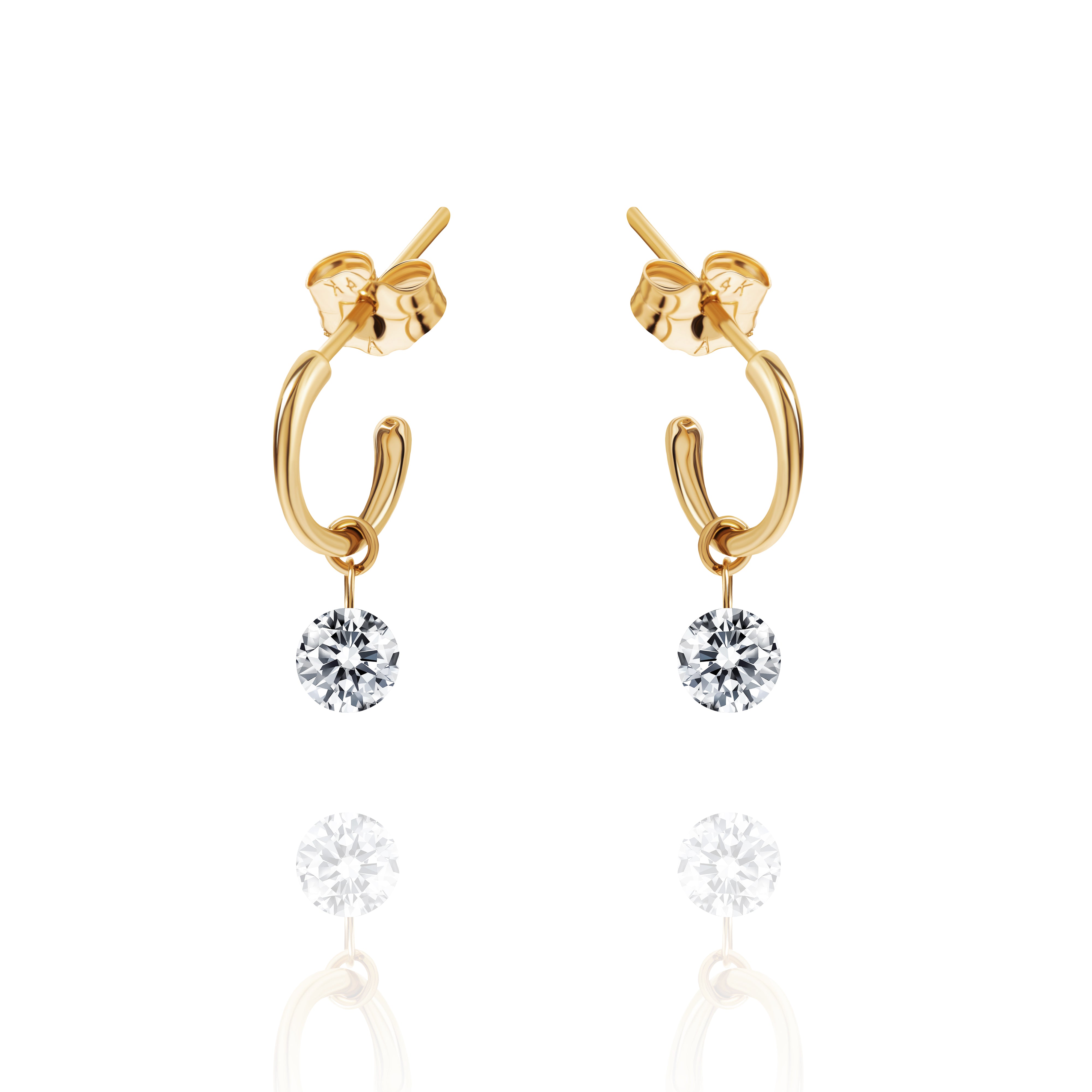
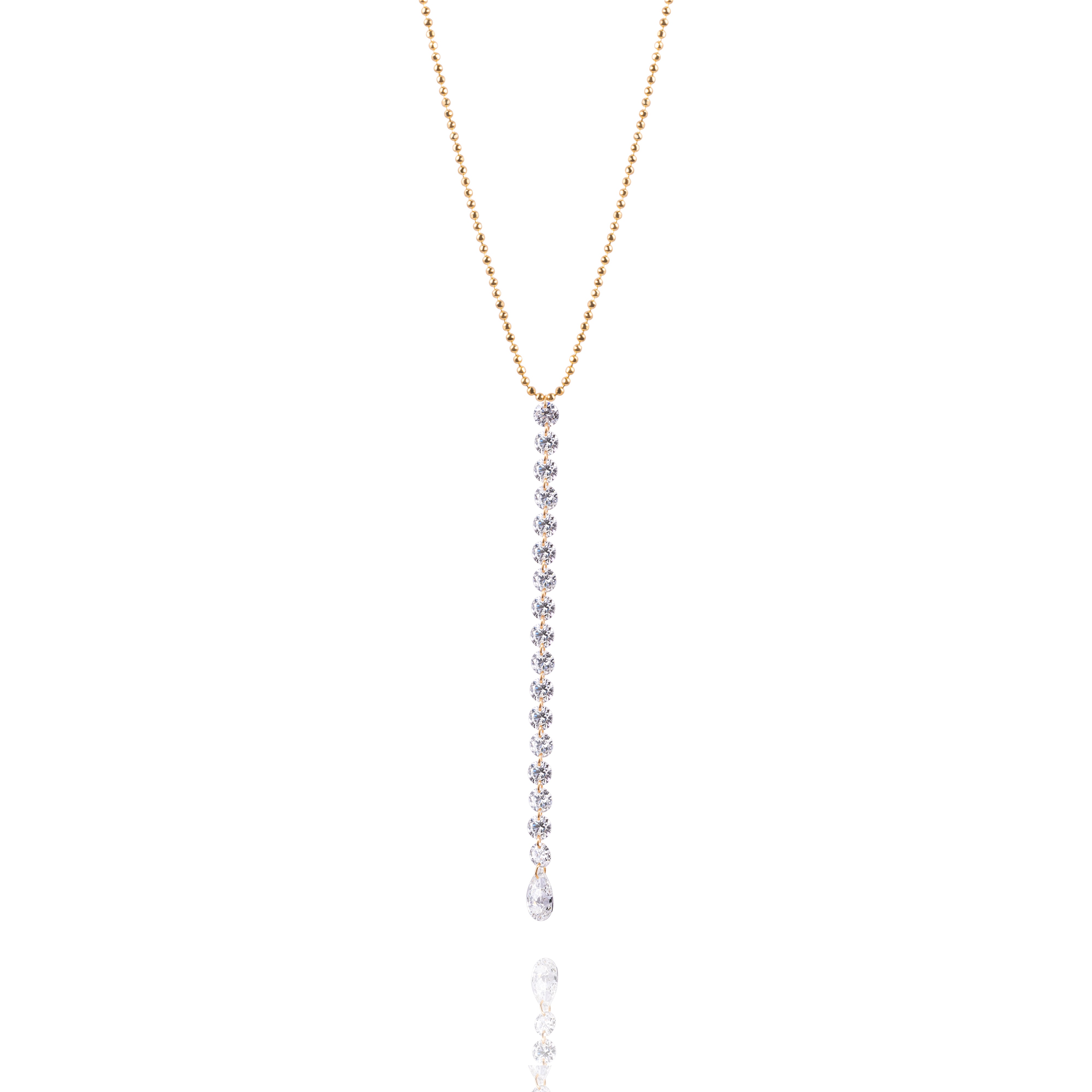
Celeste Single Floating Diamonds
Regular price $3,560.00
What a Floating Diamond Setting Is

A floating setting places the diamond directly into the metal, usually through a drilled channel or a shallow seat cut into the chain or band, rather than holding it above the surface in a raised prong or bezel mount. With nothing framing the stone, light reaches it from more angles, which is why floating diamonds tend to read brighter than the same stone in a conventional setting. The trade-off is protection. A prong setting shields the stone's edges from knocks; a floating setting does not, by design. These are pieces built for how they catch light, not for maximum durability against impact.

Station Necklaces

A station necklace sets stones, beads or charms at regular intervals along a chain, rather than at a single central point. The word comes from the way each stone reads as its own stop, or station, along the length. The Celeste line is built on this construction: the same floating-diamond technique repeated at intervals, from three stones to twenty-four, on the same base chain. More stations means more light along the piece, not a different design each time.

Floating Diamonds by the Number

The Celeste designs are named for their diamond count, which is also the simplest way to choose between them: three or five for a subtle piece worn daily, fifteen for something that reads clearly from across a room, twenty-four or the jumbo version for a piece meant to be the only jewelry worn that day. Every diamond in this collection is natural, with one labeled exception: the lab-grown diamond studs, which are disclosed as lab-grown on their own product page and in their own materials listing. Natural and lab-grown diamonds are chemically and optically identical; they differ in how they formed and in price.

14K and 18K in a Floating Setting


A channel setting asks more of the metal than a prong does, which is where 14K's extra hardness, at 58.3% pure against 18K's 75%, earns its keep. More on gold purity.

For a floating setting specifically, the metal around each stone is doing structural work that a prong setting doesn't ask of it, since it's the channel itself holding the diamond rather than a separate claw. 14K's added hardness suits pieces meant for daily wear; 18K's deeper colour suits pieces worn more occasionally, where the warmth of the metal is part of the look.

Floating Diamond FAQs

What is a floating diamond setting?

A floating setting sets the diamond directly into the metal, usually through a drilled channel, rather than holding it above the surface in a prong or bezel. With nothing framing the stone, more light reaches it from different angles, which is why these pieces tend to read brighter than the same diamond in a conventional mount. The trade-off is that the stone has less physical protection than a prong setting provides.

What is a station necklace?

A station necklace sets stones or charms at regular intervals along the length of a chain, rather than at one central point. Each stone functions as its own stop, or station. Floating diamond necklaces are commonly built as station necklaces, since the technique suits spacing diamonds evenly along a chain.

Are these diamonds natural or lab-grown?

Natural diamonds throughout this collection, with one labeled exception: the lab-grown diamond studs, disclosed as lab-grown on their own product page and materials listing. Natural and lab-grown diamonds are chemically, physically and optically identical, graded on the same scale. The difference is how they formed: natural diamonds crystallise over billions of years under heat and pressure within the earth, lab-grown diamonds form in weeks under controlled conditions that replicate the same process. They are priced very differently, which is worth knowing regardless of which you choose.

Is a floating setting durable enough for daily wear?

For most of this collection, yes, since the diamonds are set into the metal rather than perched above it, which protects them from the side in a way a raised prong doesn't. What a floating setting can't do is protect a stone from a direct hit the way a bezel can. Fine for daily wear; not the choice for heavy manual work.

How many diamonds should I choose in a station necklace?

More stations mean more light along the piece, not a different design. Three or five diamonds reads as a subtle, everyday piece. Fifteen is visible at a normal conversational distance. Twenty-four and above becomes the focal point of what you're wearing that day, worn alone rather than layered.